
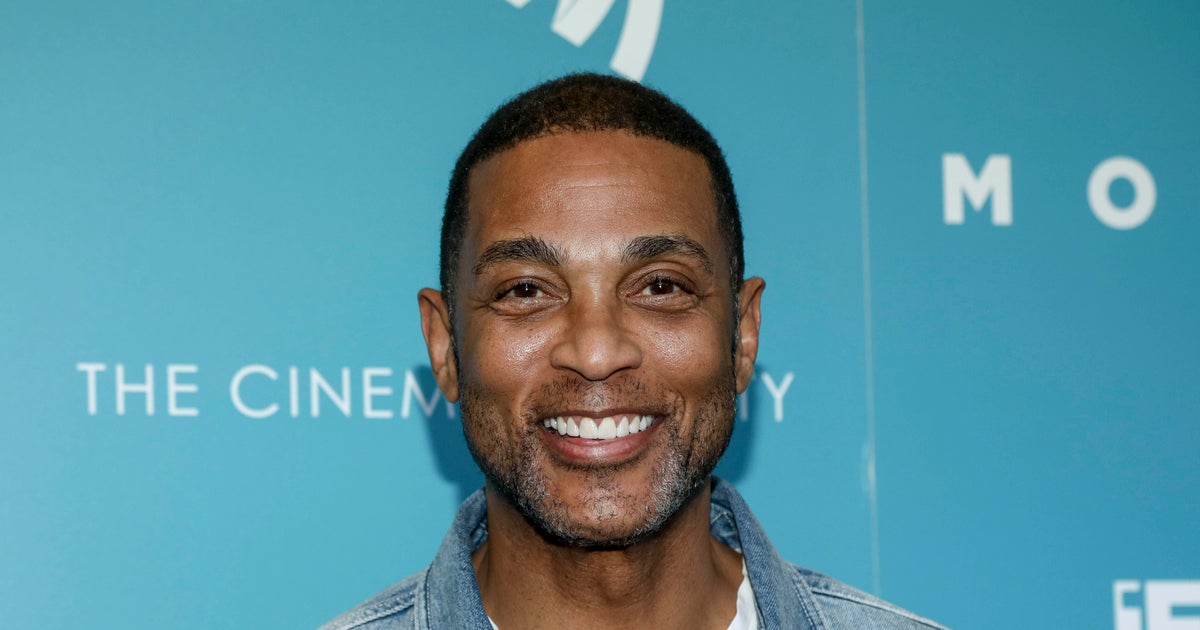
A federal appellate court ruled on Friday that the Justice Department has established probable cause to charge five people, including former CNN anchor Don Lemon, in connection with an anti-ICE protest inside a church in St. Paul, Minnesota, but it refused to order a lower court judge to sign the arrest warrants being sought by prosecutors, according to court filings and multiple sources familiar with the matter.
The ruling by the U.S. Court of Appeals for the Eighth Circuit, which was unsealed Saturday, came about after the Justice Department asked the appellate court to compel the U.S. District Court in Minnesota to sign five arrest warrants over civil rights charges alleging the defendants were unlawfully interfering with the churchgoers’ constitutionally-protected freedom to practice religion.
The ruling made public on Saturday did not identify the names of the five defendants for whom the Justice Department is seeking arrest warrants, but multiple sources confirmed to CBS that Lemon is one of them.
A spokesperson for Lemon had no immediate comment on the ruling.
CBS News reported on Thursday that Magistrate Judge Doug Micko had refused to sign an arrest warrant for Lemon, who attended the protest at the church and interviewed the pastor.
Lemon’s attorney, Abbe Lowell, said Thursday that the magistrate’s actions “confirm the nature of Don’s First Amendment protected work this weekend in Minnesota as a reporter,” and slammed the Justice Department for what he called “a stunning and troubling effort to silence and punish a journalist for doing his job.”
Three people so far have been charged in connection with the protest on Sunday, when demonstrators entered St. Paul’s Cities Church after discovering that an Immigration and Customs Enforcement official appeared to be one of the pastors at the church.
The criminal compliant shows that several defendants were also charged, but their names are redacted after the magistrate declined to sign the arrest warrants over concerns about a lack of probable cause.
Micko also separately declined to approve some of the charges for the three defendants who were arrested, also citing a lack of probable cause.
In court filings to the Eighth Circuit, Chief Judge Patrick Schiltz for the U.S. District Court for the District of Minnesota said that Micko only found probable cause on three of the eight arrest warrants presented to him by the department on Jan. 20. When he declined to sign the other five, Minnesota’s U.S. Attorney Daniel Rosen personally called the court and demanded that his decision be reviewed by a district court judge.
The matter was ultimately assigned to Schiltz.
“What the U.S. Attorney requested is unheard of in our district,” he wrote. He told the department he needed more time to confer with other judges because it was such an unusual demand, and it would normally be addressed by the Justice Department either re-submitting an improved affidavit with the criminal complaint, or by seeking a grand jury indictment.
Although he told the department he would render a decision by Tuesday, the department claimed that was too late. Citing national security concerns, he said the Justice Department claimed that getting the five warrants signed was an emergency, and if he did not act urgently, then “copycats will invade churches and synagogues” this weekend. He said the department claimed he must accept their national security concerns as true “because they said it, and they are the government.”
He added that he disagrees with their claims, noting that the worst behavior alleged against the protestors is that they were “yelling horrible things.”
“None committed any acts of violence,” he wrote. “There is absolutely no emergency.”
In its opinion, a three-judge panel from the U.S. Court of Appeals for the Eighth Circuit said that while they believe the department has established probable cause to justify the arrests, they did not believe the Justice Department’s claim that it “has no other adequate means of obtaining the requested relief.”
It is not immediately clear what the Justice Department will do next. It could draft new affidavits in support of the charges and re-present them to a magistrate judge, or it could also potentially seek grand jury indictments instead.