
Shoffner said she joined a California-based climate group because of its support for a bill that would tax Americans for their emissions
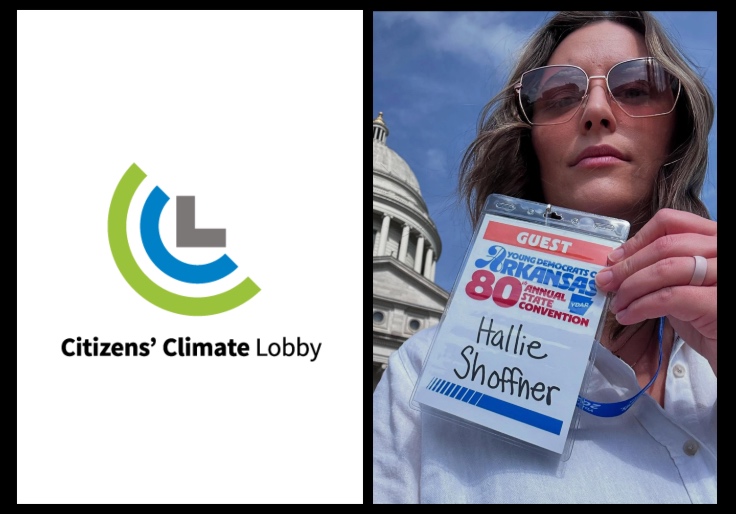
Hallie Shoffner is running for Senate in Arkansas as a political outsider who will “fight for farmers.” Before launching her campaign, however, Shoffner revealed that she joined a California-based climate organization over its support for a carbon tax bill that could cost farmers billions.
In a 2020 op-ed for the Arkansas Business Journal, headlined “This Is How I Will Change My Son’s Future,” Shoffner identified “climate change” as something that “keeps [her] up at night” and “scares the bejesus out of” her. She urged readers to join Citizens’ Climate Lobby, an environmental nonprofit based in Coronado, Calif., that maintains local chapters throughout the United States and advocates for a tax on carbon.
“I joined Citizens’ Climate Lobby because this organization and its members support a solution as real and immediate as climate change itself, the Energy Innovation & Carbon Dividend Act,” wrote Shoffner. “Introduced in the U.S. House of Representatives in 2018 with bipartisan support, this agriculture-friendly policy puts a fee on fossil fuels, starting low and growing over time.”
The bill does tax fossil fuels, charging companies $15 per metric ton of carbon emissions at its onset before increasing the fee by $10 or $15 each year based on emission levels. But experts disagree with Shoffner’s claim that the policy is “agriculture-friendly.”
The agriculture industry accounted for 600 million metric tons of emissions in 2024, according to a Congressional Budget Office report, meaning it would face an initial $9 billion in fees under the bill. Those costs would especially affect farmers that produce energy-intensive products like corn, which would cost 16 percent more to produce after 10 years of carbon fees, according to an Iowa State University study. The fees would also lead to a 5 percent decrease in corn exports, the study found. The United States exported nearly $14 billion worth of corn in 2024, according to the Department of Agriculture, making it the world’s top corn exporter. A 5 percent decrease, then, would amount to roughly $700 million.
“It would squeeze already thin margins, reduce competitiveness against foreign producers who face no similar tax, and hit rural communities first and hardest,” American Energy Institute CEO Jason Isaac said of the policy.
Shoffner’s climate activism undermines the Democrat’s campaign image in a state that backed President Donald Trump by more than 30 points in 2024.
While Shoffner is running against Republican incumbent Tom Cotton as a lifelong farmer, she spent years working as a left-wing activist before returning to her family’s farm in 2016, the Washington Free Beacon reported. Shoffner developed fundraising strategies for a Soros-funded social justice nonprofit in Peru and served as executive director of an Arkansas nonprofit that supports illegal immigrants.
When Shoffner returned to farming, she worked with a local marketing firm to build a “brand” as “FarmHerHallie,” operating a since-deleted blog, FarmHerHallie.com, that aimed to “bridge the divide between ‘big ag’ and big climate action.” It featured posts from Shoffner with headlines like “What To Do About Climate Anxiety” and “I’m a ‘Big Ag’ Farmer and I Advocate for Climate Action.”
Shoffner, whose campaign did not respond to a request for comment, has backed away from such rhetoric since launching her Senate campaign. Her campaign website’s “issues” page does not mention the word “climate,” and her LinkedIn profile does not mention her work as an activist.
American Enterprise Institute senior fellow Benjamin Zycher, who penned a report on a proposed carbon tax that was identical to the Shoffner-backed bill, called the policy “poor conceptually and deeply unserious.” The bill includes a “dividend” system that would see carbon tax revenue paid out in monthly installments to the American people, a provision that Shoffner touted in her 2020 op-ed. But Zycher argued that the payments would not keep up with subsequent increases in energy prices.
“Governments are loath to raise energy prices directly,” Zycher said in an interview. “That’s just not very popular.”