
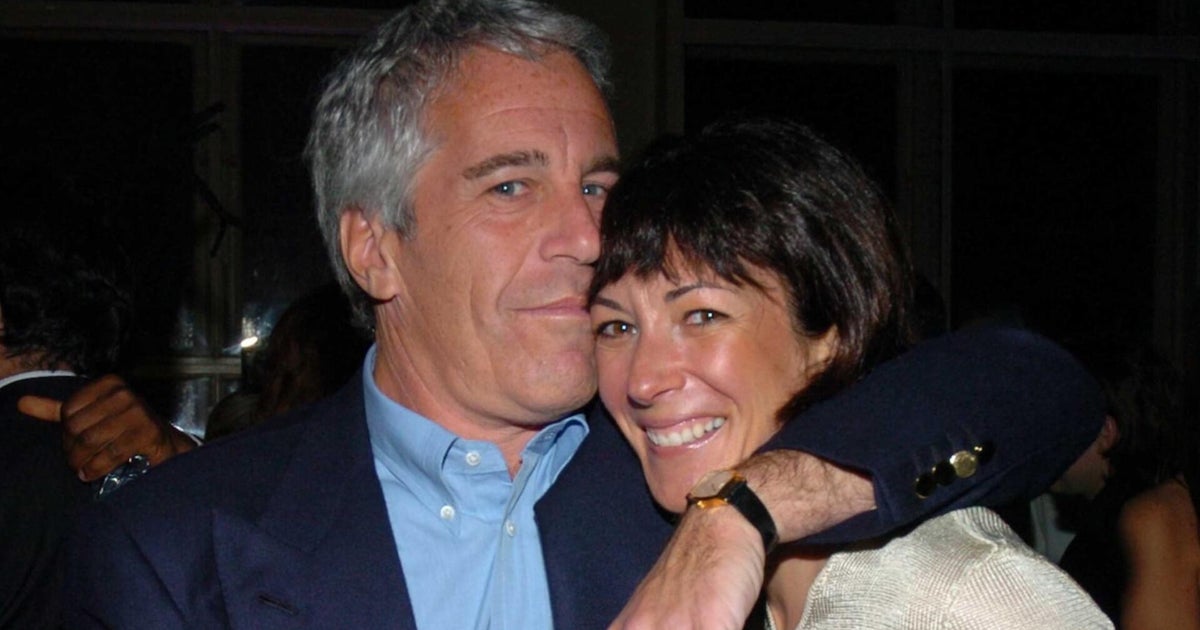
Washington — A federal judge on Tuesday granted the Justice Department’s request to unseal a “voluminous” set of grand jury transcripts and evidence from a sex trafficking case in New York against Ghislaine Maxwell, a co-conspirator and friend of the late convicted sex offender Jeffrey Epstein.
U.S. District Judge Paul Engelmayer granted the request after the Justice Department renewed its efforts for the material to be made public after Congress passed and President Trump signed a law that requires the department to disclose records related to past investigations into Epstein.
The passage of the Epstein Files Transparency Act, Engelmayer said, “unambiguously applies” to not just the grand jury transcripts and evidence against Maxwell, but to “voluminous discovery” including unclassified records, documents, communications and investigative materials in the Justice Department’s possession.
The law requires the Justice Department to provide Epstein- and Maxwell-related records to the public by Dec. 19.
Maxwell’s legal team said in a one-page letter to Engelmayer that she did not take a position on the Justice Department’s motion. Maxwell was convicted of federal sex trafficking charges in 2021 and is currently serving a federal prison sentence that is set to run through 2037. Her legal team did not immediately respond to a request for comment on the order.
In November, the Justice Department asked judges in Florida and New York to unseal material in the sex trafficking cases of Epstein and Maxwell.
Last week, a federal judge granted the Justice Department’s request in Florida to unseal grand jury transcripts from federal investigations into Epstein from 2005 and 2007.
In July, the Justice Department moved to unseal grand jury materials in the Epstein and Maxwell investigations, but those initial bids were denied, because federal rules required grand jury proceedings and evidence to be kept secret.
However, after the passage of the Epstein Files Transparency Act, the Justice Department argued that the law should override grand jury secrecy rules.
Engelmayer’s order requires the identities of Epstein and Maxwell’s victims to be redacted to protect them, he wrote, citing ongoing concerns from the victims and their families, and lack of consultation with the victims by the Justice Department during this process.
“The victims’ concerns, regrettably, have a basis in fact. In its two rounds of applications to this Court to disclose records, DOJ, although paying lip service to Maxwell’s and Epstein’s victims, has not treated them with the solicitude they deserve,” Engelmayer wrote.
Engelmayer said he has “put in place a mechanism to protect victims from the inadvertent release of materials within the discovery in this case that would identify them or otherwise invade their privacy,” and will require the U.S. attorney to “personally certify” that material is properly reviewed before it is released to protect victims’ identities.
Epstein died in a Manhattan jail in 2019 after being charged with federal sex trafficking charges.