
U.S. Immigration and Customs Enforcement has been directed by the Trump administration to target undocumented Somali immigrants in the Twin Cities, a person familiar with the planning confirmed.
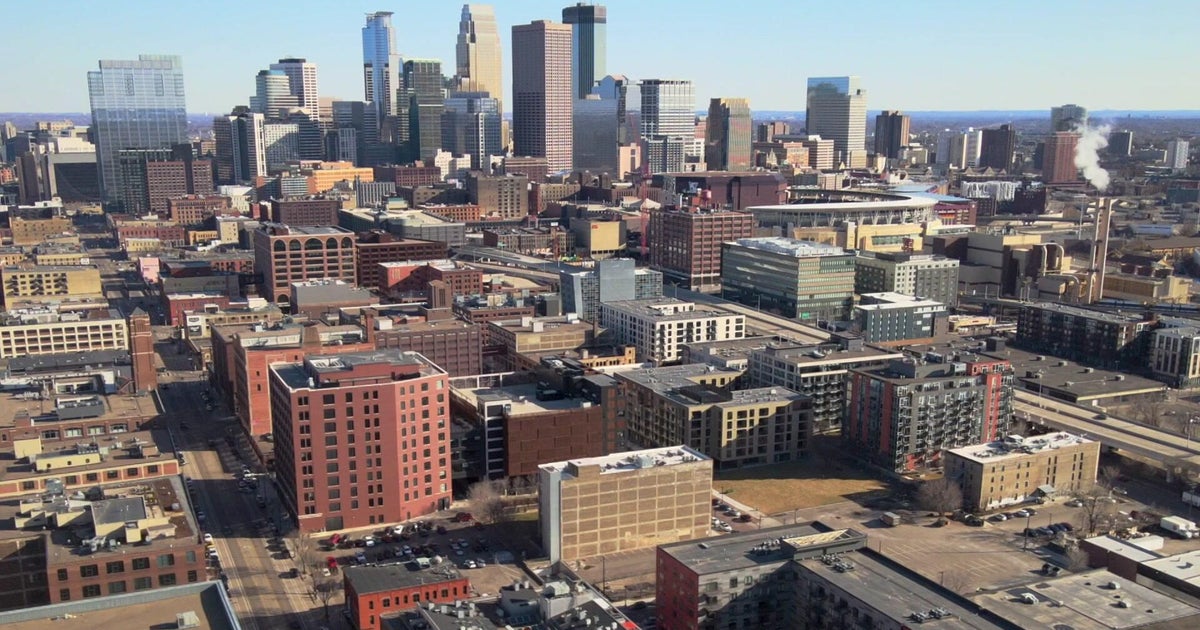
A U.S. official says ICE is planning to surge resources to the Minneapolis-St. Paul area to launch immigration enforcement operations there targeting individuals with deportation orders. The region has a large population of immigrants from Somalia, some of whom have deportation orders.
The enhanced ICE operations in the Twin Cities are expected to begin this week, the official said. The operations were first reported by the New York Times.
Hundreds of people are expected to be targeted, the person familiar with the planning said.
Homeland Security spokesperson Tricia McLaughlin said the agency would not discuss “future or potential operations.”
President Trump: “I don’t want [Somalis] in our country”
In the midst of Tuesday’s reports, President Trump took further aim at Minnesota’s Somali community, the country of Somalia and the diaspora at large.
“They contribute nothing … I don’t want them in our country,” Trump said to the press on Tuesday. “That’s not politically correct, but I don’t care. I don’t want them here. Their country is no good for a reason.”
In a Thanksgiving post where he also called Gov. Tim Walz a slur for people with intellectual disabilities, Mr. Trump said Somali refugees are “completely taking over the once great State of Minnesota.”
Mr. Trump also previously ordered all green card holders from Somalia and more than a dozen other countries to be reexamined and said he would end the temporary protected status for Somalis in Minnesota, claiming, without evidence, that “Somali gangs are terrorizing the people of that great state.” The latter move would affect hundreds in the community.
Mr. Trump has become increasingly focused on people of Somali descent living in the U.S., saying recently that they “have caused a lot of trouble,” which is rhetoric that community leaders say has inflamed tensions and revived fears of profiling.
On Monday evening, Treasury Secretary Scott Bessent also announced his department is investigating whether Minnesota tax money found its way to al Shabaab, a U.S.-designated foreign terrorist organization and al Qaeda affiliate based in Somalia.
Minneapolis, St. Paul leaders stand in solidarity with Somali community
In a joint news conference on Tuesday afternoon, the mayors of Minneapolis and St. Paul, along with Minneapolis Police Chief Brian O’Hara and Minneapolis City Council member Jamal Osman, said they are standing in solidarity with the metro’s Somali community.
“To our Somali community, I love you, and we stand with you. That commitment is rock solid,” said Minneapolis Mayor Jacob Frey. “Minneapolis is proud to be home to the largest Somali community in the entire country. They’ve been here for decades, in many instances. Entrepreneurs and fathers, they benefit both the cultures and the economic resilience of our city.”
Frey said the targeting of Minnesota’s Somali population “means due process will be violated.”
“Mistakes will be made, and let’s be clear, it means that American citizens will be detained, for no other reason than the fact that they look like they are Somali,” Frey said. “That is not now and will never be a legitimate reason.”
St. Paul Mayor Melvin Carter said the actions of the Trump administration are “un-American.”
“I grew up in an America that prided itself on being a country of immigrants, that prided itself on the fact that people from other countries would look across a whole ocean and say that’s where I want to be. It seems that what we learned was that we’ve prided ourselves and we have decades and generations of priding ourselves on being a beacon for immigration from Europe,” Carter said. “I mean, it seems to many of us, like, the darker-skinned the immigrants who come to our country are, the more our posture on immigration as a country has shifted. That’s un-American. That’s concerning.”
Carter said the Twin Cities need to unite to stand up for immigrants and refugees.
“The last thing that we need is federal agents coming to town attempting to turn us against each other, to turn us against ourselves. The last thing we need is federal agents coming in town to create chaos and challenge for us, and so we stand together,” Carter said. “We encourage folks to look to the organizations that serve immigrants and refugees across our community because we have constant reminders out there about what your rights are. You have rights, that’s an American thing.”
Minneapolis City Council member Jamal Osman, who was born in Somalia, pulled no punches in his assessment of the president.
“One of the things I do want to say, and obviously everyone knows that our president is racist, xenophobic, Islamophobic, and we’re going to fight that,” Osman said. “America has a history of fighting and stopping those kind of individuals who continue to divide people and divide communities.”
Osman said his community will remain firm amid the current climate of danger.
“Our community has lived through fear in the past, and we’re not gonna let them divide that,” Osman said.
As head of the Minneapolis police, O’Hara reiterated that his police officers do not work with federal law enforcement who are conducting immigration enforcement.
“We don’t provide information to federal immigration authorities,” he said. “We don’t ask people about their immigration status. Our mission is clear: to protect life, to uphold the law and to maintain safety for all people in our communities.”
Gov. Walz calls reports of ICE operation “PR stunt”
On Tuesday afternoon, Walz responded to the reports that ICE would target undocumented Somalis in the Twin Cities, calling it “a PR stunt.”
“We welcome support in investigating and prosecuting crime,” Walz added. “Indiscriminately targeting immigrants is not a real solution to a problem.”
Minnesota has the largest Somali population in the U.S., numbering roughly 80,000 people, according to Minnesota Compass, a project of Wilder Research. Many fled the long civil war in their East African country and were drawn to the state’s welcoming social programs.
Jaylani Hussein, a Somali American who is executive director of the Minnesota chapter of the Council on American-Islamic Relations, said his group has heard of “less than a dozen” immigration arrests within the local Somali community in recent days.
But Hussein said around 95% of Somalis in Minnesota are U.S. citizens, so the number of those at earlier stages of the immigration process is a “pretty small” proportion of the community. He said they estimate that 50% of the community was born in the U.S.