
Tehran offered its own terms for an agreement, which include dismantling all US military bases in the Middle East and granting the Iranian regime control over the Strait of Hormuz
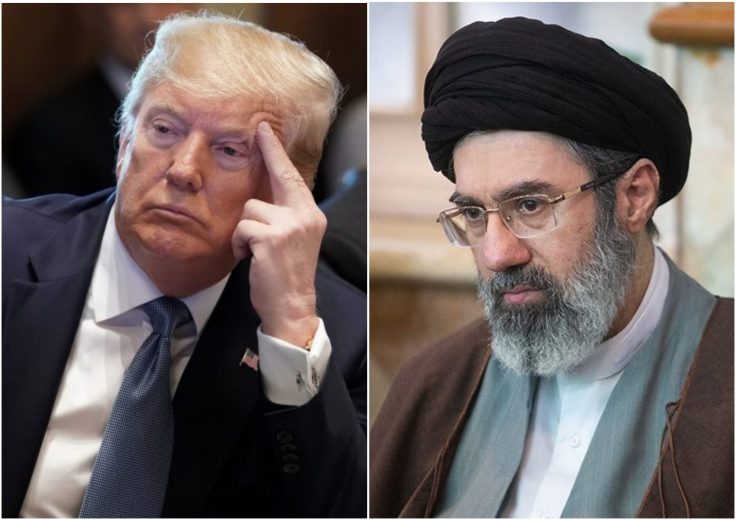
Iranian leaders rejected President Donald Trump’s 15-point peace plan to end the ongoing U.S.-Israeli military effort against the regime, saying Wednesday that neither a ceasefire nor negotiations toward one are on the table.
“Iran does not accept a ceasefire,” an unnamed senior Islamic Republic leader told the Fars news agency. “Basically, it is not logical to enter into such a process with those who violate the agreement.” A second Iranian official, speaking to state-run Press TV, said, “Iran will end the war when it decides to do so and when its own conditions are met.”
Trump’s proposal is similar to the conditions he set for negotiations before launching Operation Epic Fury. Tehran would have to dismantle its nuclear facilities in Natanz, Esfahan, and Fordow, as well as abandon its support for terrorist proxy groups across the region. The terms also reportedly mandate that Iran relinquish its ability to enrich uranium, ensure safe passage for commercial vessels in the Strait of Hormuz, and significantly scale back its ballistic missile program.
The United States transmitted the deal to the Islamic Republic’s remaining leadership through Pakistan, which has offered to mediate ceasefire talks. The Iranian regime rejected the proposal immediately, signaling that Tehran has not softened its stance since the U.S.-Israeli military campaign began. On Monday, Trump announced that he would postpone strikes on Iranian energy infrastructure, saying Middle East envoys Steve Witkoff and Jared Kushner held “very strong talks” with Iranian negotiators. The Islamic Republic, though, continues to claim no talks have taken place.
“Tehran and Washington aren’t in talks nor have they held discussions since the onset of the war in late February,” Iranian foreign ministry spokesman Esmail Baghaei was quoted as saying in an interview with India Today.
“We made it clear yesterday there is no talks or negotiations between Iran and the U.S.,” Baghaei said. “We’ve had a very catastrophic experience, I should say, of the U.S. diplomacy. We were attacked two times within a span of nine months when we were in the middle of a negotiating process to resolve the nuclear issue. So this was a betrayal of diplomacy.”
The Islamic Republic has submitted its own set of proposals, though Tehran’s terms do not come close to meeting the United States’ requirements. The regime demands a “guarantee” that “war will not recur” and that the United States shutter all its military bases in the region, according to details broadcast over the weekend by Hezbollah’s Al Mayadeen news network. It listed reparations for regime infrastructure destroyed in the engagement and control of the Strait of Hormuz as additional sticking points.
“Iran intends to continue its policy of punishing the aggressors until it teaches the American-Zionist aggression and Trump a historic lesson,” an unnamed Iranian official told Al Mayadeen on Sunday. “Some of the parties and mediators in the region have submitted proposals to Tehran to stop the war, but Tehran has set conditions that must be taken seriously.”
A member of Iran’s national security committee, Alaa Al-Din Boroujerdi, floated a plan to charge commercial vessels up to $2 million for sailing through the strait in the same interview, according to a translation from the Middle East Media Research Institute.