
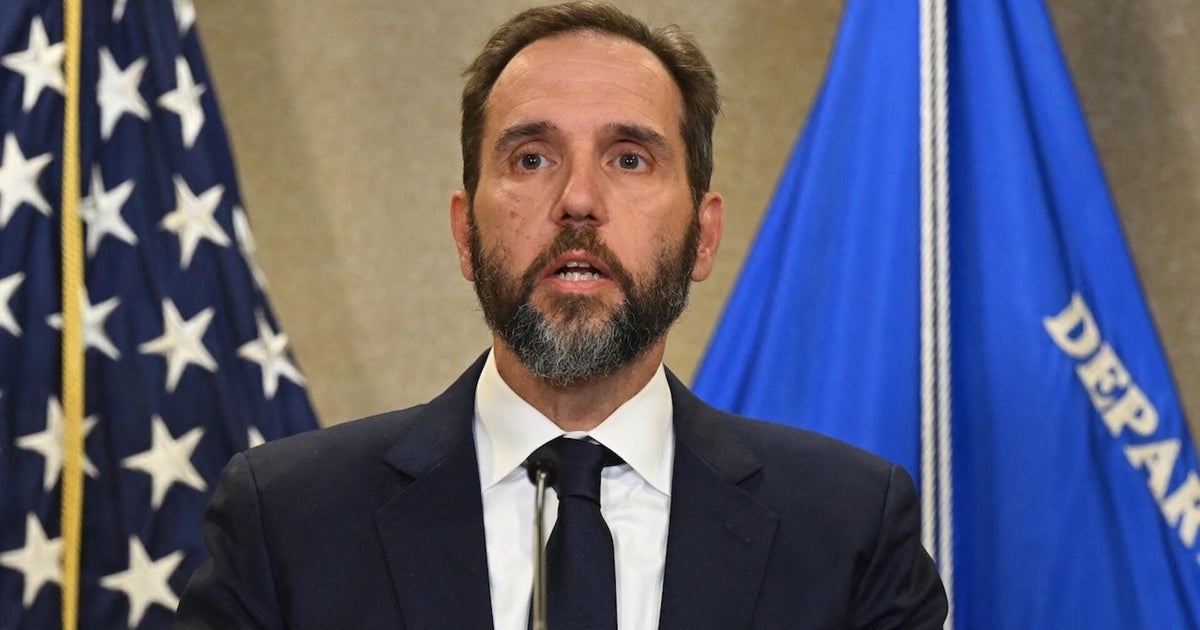
Testimony comes after months of Smith offering to appear publicly
In an October letter from his lawyers to lawmakers, Smith offered to testify before both the House and Senate Judiciary Committees. In December, the Republican chairman of the House Judiciary Committee, Jim Jordan of Ohio, subpoenaed him to appear behind closed doors instead.
Rep. Jamie Raskin, the top Democrat on the Judiciary Panel, said Smith answered every question to “the satisfaction of any reasonable-minded person in that room.”
Following Smith’s testimony, Rep. Daniel Goldman, a Democrat from New York, criticized Jordan for having Smith testify privately first.
“The accusations against him are completely bogus, and the American people should hear that for themselves,” he said.
Following his testimony, Smith’s lawyers again asked for their client to appear publicly, urging Jordan to call him to testify in an “open and public” hearing. Jordan said earlier this month that he had scheduled his public testimony for Jan. 22.
Smith is also under investigation by the Office of Special Counsel, an agency that is unrelated to Smith’s former position as special counsel. His lawyers called the ethics probe by the Office of the Special Counsel “imaginary and unfounded.”
What Smith can talk about, and what he likely can’t
While Smith spoke at length at his deposition about his investigation into Mr. Trump related to the 2020 election, it’s unlikely that he will be able to speak in detail about the classified documents case due to ongoing court proceedings.
For over a year, U.S. District Judge Aileen Cannon, who oversaw the initial stages of the documents prosecution, has blocked the release of the second volume of the final report that Smith submitted to then-Attorney General Merrick Garland. Smith left the Justice Department shortly after submitting his reports.
However, in December, after Smith’s testimony, Cannon granted attorneys for Mr. Trump a 60-day window to challenge whether the report should continue to be under seal as separate legal proceedings in the case continue. On Tuesday, Mr. Trump’s legal team asked Cannon to grant an order blocking “current, former and future” DOJ officials from ever releasing the report.
When pressed on whether he could talk about the second volume of the report, Smith told lawmakers that he did “not want to do anything to violate that injunction or that order,” and said he has not reviewed his report since it was submitted to Garland in early 2025. Smith told lawmakers that unless something related to the handling of the case was in a public filing, he could not address it.
Smith defended his probes at deposition, said he had not made “final decisions” on charging co-conspirators
Behind closed doors in December, Smith defended himself from accusations from committee staff and Republican lawmakers that his investigations into Mr. Trump were intended to stop his presidential campaign.
“All of that is false,” Smith said, adding that “the evidence here made clear that President Trump was by a large measure the most culpable and most responsible person in this conspiracy. These crimes were committed for his benefit. The attack that happened at the Capitol, part of this case, does not happen without him. The other co-conspirators were doing this for his benefit. So in terms of why we would pursue a case against him, I entirely disagree with any characterization that our work was in any way meant to hamper him in the presidential election.”
Smith revealed that he and his team determined they had evidence to charge some of Mr. Trump’s co-conspirators in the election-related case, but said that by the time the cases were dismissed, he had not yet made final decisions on whether to do so.
One of those co-conspirators was Rudy Giuliani, Smith said, before later saying that it’s possible the former mayor of New York could have testified against Mr. Trump. Giuliani, Smith said, “disavowed a number of the claims” that he made repeatedly about the integrity of the 2020 election in an interview with the special counsel’s office.
There were six unnamed co-conspirators in the indictment against Mr. Trump. Based on details and Smith’s testimony, they appeared to be Giuliani, Sidney Powell, John Eastman, Kenneth Chesebro, Boris Epshteyn and Jeffrey Clark, who was a high-ranking Justice Department official at the time.