
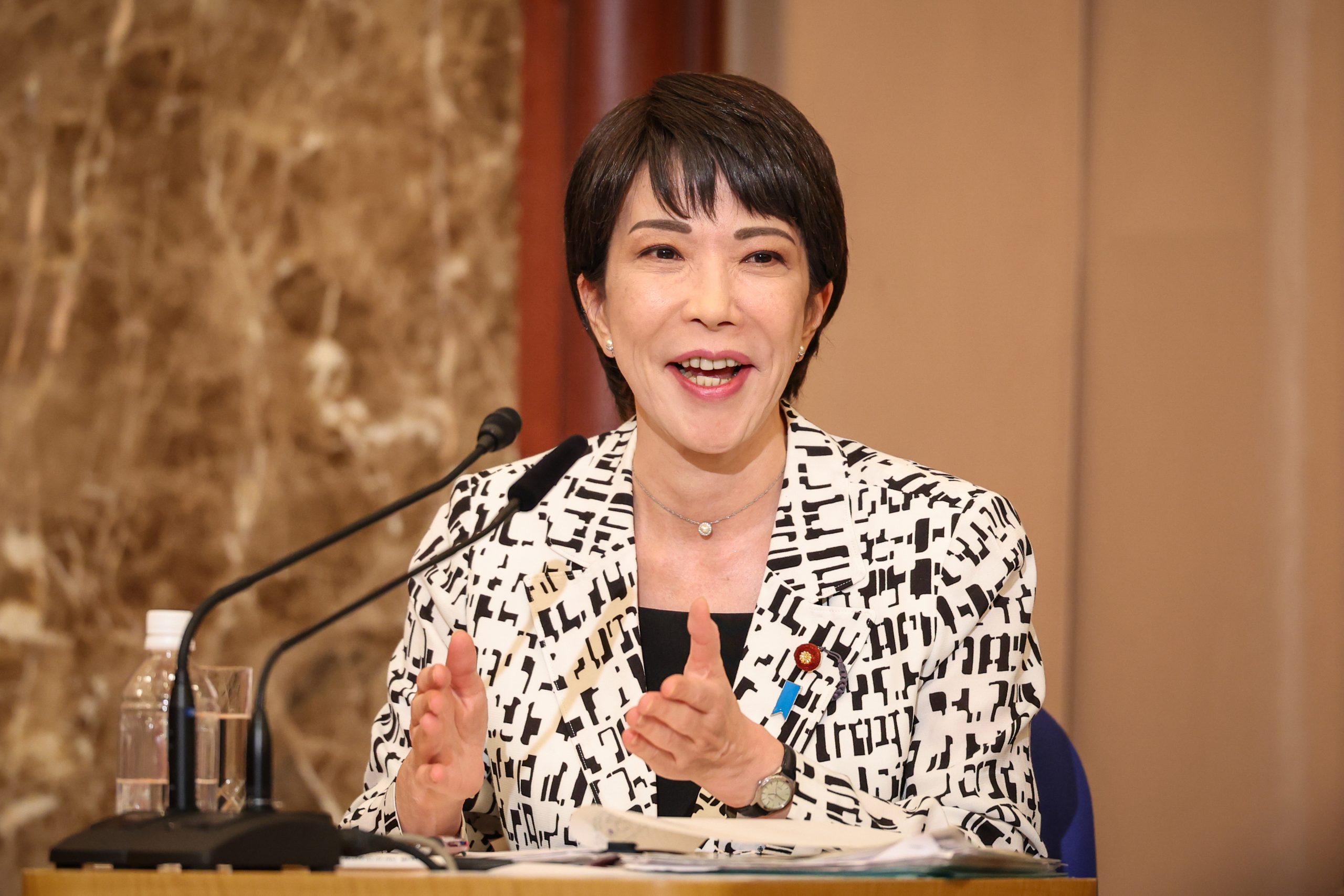
In the land that introduced the world to Godzilla, a new giant has arisen. The Liberal Democratic Party’s landslide victory in Japan’s lower house elections on Sunday gave Prime Minister Sanae Takaichi the largest majority of any party in 80 years. So many party members won their districts outright that the LDP has to find extra candidates to fill the seats that are awarded based on percentage of the national vote.
This result is a major step forward for Japan and for its most important ally, the United States. Takaichi has shown great courage and determination in her short tenure as prime minister, and the Japanese electorate gave her two big thumbs up. Now she will need to use her considerable talents to revitalize her country and help preserve peace in the region.
That region, of course, includes China, whose leader Xi Jinping was humiliated as much as Takaichi’s domestic opponents. The Chinese Communist Party erupted in fury after the prime minister told Japan’s parliament in November that a Chinese attack on Taiwan could necessitate Japanese military intervention. Since then, insults and threats have poured out of Beijing, and Xi has hit the Japanese people in the pocketbook: Chinese tourism has slumped, as have seafood purchases from and critical mineral exports to Japan.
Much to Xi’s chagrin, the Japanese people refuse to be browbeaten into submission. Takaichi’s popularity grew during this pressure campaign. Even areas that lost the most from the tourism slowdown didn’t flinch.
The election is also a significant victory in a longer campaign about the fate of the Western Pacific and, potentially, the entire international order. Xi has said that control over Taiwan, or “national reunification” as he calls it, is “a historical necessity” for his ultimate goal, “the great rejuvenation of the Chinese nation.” This would be a disaster for Japan, since Taiwan stands astride most of its supply lines and, under mainland domination, could cut off those lines at will. Even a peaceful unification would pose a severe threat to Japan’s independence and thus to the balance of power in Asia.
Like any skilled politician, Takaichi focused a lot on kitchen-table issues, but the geopolitical stakes were clear when the polls opened. Bases in Japan are critical for the U.S. military’s efforts to deter China in the region. Xi could not hope for Tokyo to close those bases after this election, but if the voters had punished Takaichi for speaking clearly about the threat posed by China, ambitious and unscrupulous politicians in Japan would see appeasing Beijing as a pathway to power.
The reverberations immediately echoed across the region. China seeks to demoralize the Taiwanese by, among other things, sowing doubt about American and Japanese commitment to the island democracy. That backfired this week. Taiwanese president Lai Ching-te hailed Takaichi’s victory while the Chinese government sputtered about his supposedly “obsequious and sycophantic attitude” to his great friend.
Japan’s iron lady has more victories in mind. The post-World War II constitution states that “land, sea, and air forces, as well as other war potential, will never be maintained.” Yet Japan has maintained its Self-Defense Forces for decades due to the Communist threat to the region. Some opposition parties claim the SDF is unconstitutional though, so the prime minister wants to explicitly authorize them with an amendment.
The longer-term implications would be more profound than the immediate effect. A national debate about the SDF would prod the Japanese people to contemplate the growing threats facing their country and how to deter them. Those deliberations would create a consensus around not just the text of the constitution, but the steps needed to preserve the freedoms enshrined in it. And an overwhelming endorsement of the Japanese military would send a powerful message about Japan’s strength and resolve that would reassure Americans, hearten the Taiwanese, and concern the Chinese.
It would also build support for the greater sacrifices the Japanese people need to make. Japan needs to continue expanding the SDF to protect itself and its neighbors from China. Since its government’s debt is already over twice the size of its economy, and interest rates on its bonds are edging upward, there is no painless way to find the funds.
This will not be easy, despite her thumping majority. Takaichi’s mentor Shinzo Abe sought to amend the constitution when he was prime minister, but his hopes were dashed. Xi is making the Chinese threat too big to ignore, however, and his bluster might prove to be Takaichi’s greatest ally.