
Nearly three-fourths of the copies Newsom sold around the time he landed on the list came from his campaign
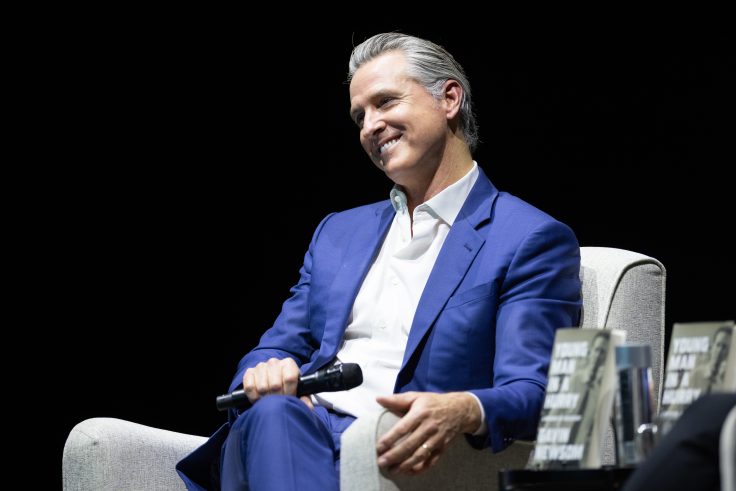
The New York Times placed Gov. Gavin Newsom (D., Calif.) on its coveted Best Sellers list even as it acknowledged that Newsom used campaign-funded “bulk sales” to sell tens of thousands of copies of his memoir, Young Man in a Hurry. The Times has cited such sales to disqualify Republican politicians from its list.
From early November to late January, Newsom sent fundraising emails and social media posts offering to send a copy of the book to supporters who contributed “ANY AMOUNT,” even “a few bucks,” to his PAC. Newsom went on to disclose in a recent campaign finance report two January payments to Porchlight Book Company—a Milwaukee-based business that specializes “in moving books in bulk”—totaling more than $1.5 million for “books at cost.” The money paid for 67,000 copies of Newsom’s book, according to a Newsom spokesman.
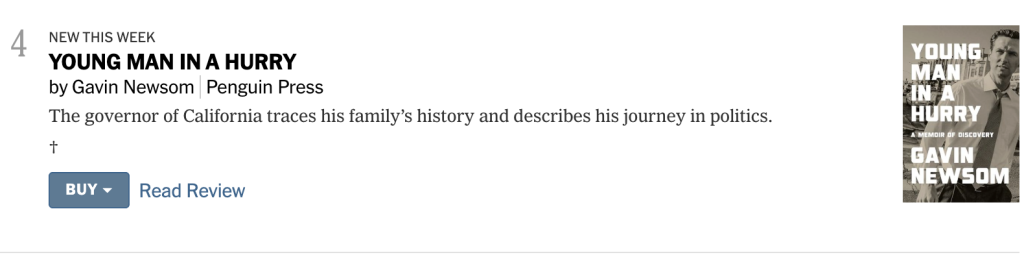
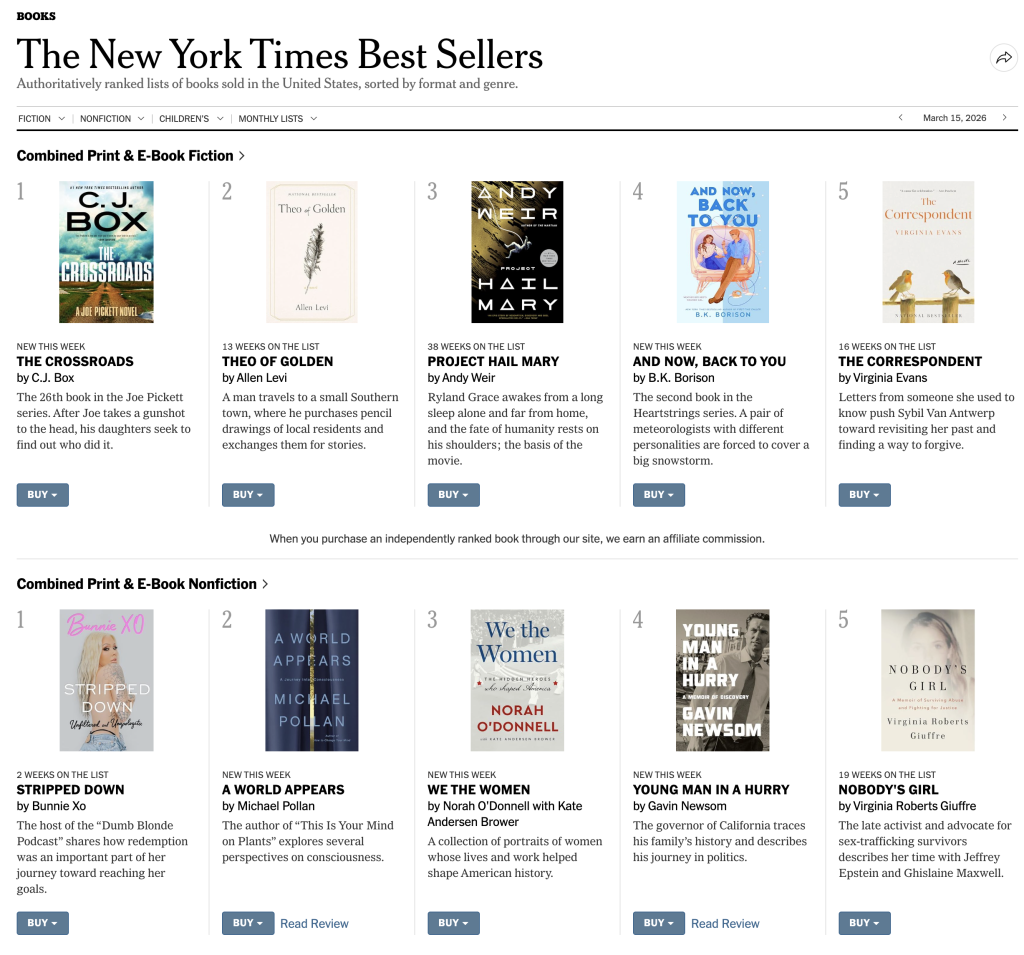
Weeks later, in a March 4 press release, Newsom’s team said the book had sold 91,000 copies “through organic, in-person and online, non-bulk purchases in the United States,” causing it to land “on bestseller lists within hours of its release.” Young Man in a Hurry did not appear on the Times‘s March 8 Best Sellers list for nonfiction, but it did appear on the following week’s list at the number four spot. At that time, nearly three-fourths of the copies sold—67,000 of 91,000, or 73.6 percent—came from Newsom’s PAC, a scheme that Times spokeswoman Danielle Rhoades Ha acknowledged amounted to “bulk sales.”
“When the Times has reason to believe that sales of a book include a mix of organic and bulk sales, the book’s best-seller ranking is accompanied by a dagger,” Rhoades Ha said in a statement shared with the Washington Free Beacon. “That’s what we did with the Newsom book.”
Young Man in a Hurry‘s slot on the Times Best Sellers list does include a small “dagger” icon, which the Times says “indicates that some retailers report receiving bulk orders.” But the icon is only visible when viewing the full nonfiction list—it is not included on the list’s homepage, which shows the top five Best Sellers in every category.
There would have been precedent, meanwhile, for the Times to have excluded Newsom from the list entirely as a result of the bulk sales.
In 2015, the Times refused to place Texas Republican senator Ted Cruz’s debut book, A Time for Truth, on its Best Sellers list “despite the fact that the book has sold more copies in its first week than all but two of the Times’ bestselling titles,” Politico reported. The Times cited an “overwhelming preponderance of evidence … that sales were limited to strategic bulk purchases.” Cruz accused the Times of political bias before landing on the list about a week later as the controversy drove sales. His campaign later disclosed a $122,000 payment—about a tenth of the amount Newsom’s PAC disclosed spending—to his book’s publisher around the time of its release.
It’s unclear what separates Newsom’s case from Cruz’s. The Times Best Sellers list’s stated methodology notes that books with “bulk purchases” are “included … at the discretion of The New York Times Best-Seller List Desk editors based on standards for inclusion that encompass proprietary vetting and audit protocols, corroborative reporting and other statistical determinations.” Rhoades Ha did not answer a question on what prompts the Times to include a book on the list with an accompanying “dagger” rather than exclude it altogether.
Newsom paid for the books through the federal PAC, Campaign for Democracy, that he launched in 2023 and is expected to indirectly support his presidential run. It has spent millions of dollars on digital ads and cross-country travel boosting Newsom’s profile. The book purchases—which Newsom did not receive royalties for, according to a spokesman—marked the PAC’s largest expenditure in the first quarter of 2026.
The memoir, released on Feb. 24, depicts Newsom as a disadvantaged boy who overcame what Vogue described in a fawning profile as a “schizophrenic upbringing.” Newsom has faced criticism for that depiction, given his connections to San Francisco’s wealthiest families. Newsom’s father was a lifelong friend of billionaire oil heir Gordon Getty and managed the family trust, and Newsom founded a wine business, PlumpJack, alongside Getty in 1992 that is now worth hundreds of millions of dollars.