
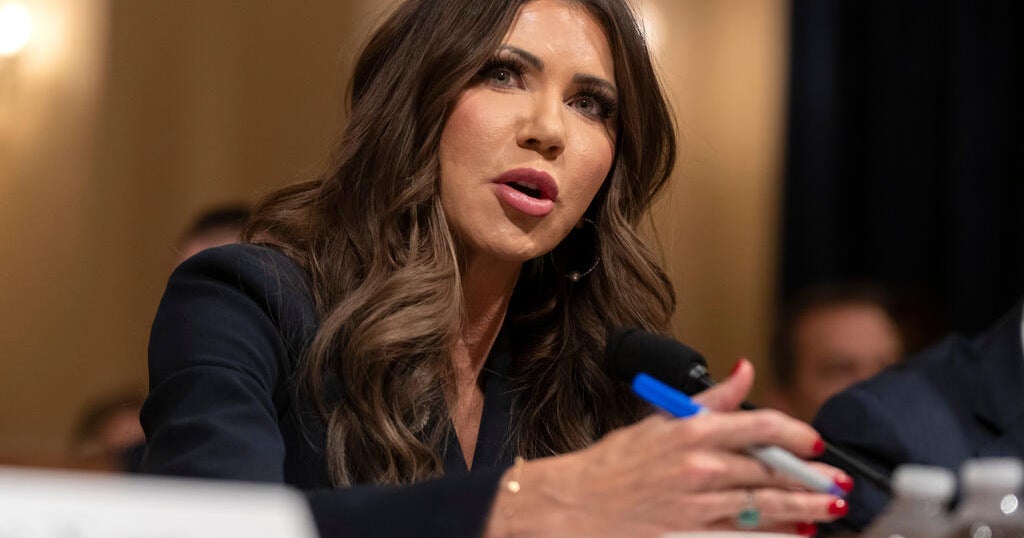
Secretary of Homeland Security Kristi Noem announced late Thursday that the Trump administration will pause the diversity visa lottery program, which she said was used eight years ago by the now-deceased man accused of killing two Brown University students and an MIT professor.
“This heinous individual should never have been allowed in our country,” Noem said on X. “At President Trump’s direction, I am immediately directing USCIS to pause the DV1 program to ensure no more Americans are harmed by this disastrous program.”
Noem said the suspected shooter, Claudio Manuel Neves Valente, entered the United States through the program in 2017 and was issued a green card.
Launched in the 1990s, the program offers 50,000 visas per year to people from countries with relatively low rates of immigration to the U.S., with recipients selected at random using a lottery. Every year, tens of millions of people vie for visas through the program.
In order to qualify for a diversity visa, applicants must have at least a high school education or two years of work experience in a field that requires training. They are also required to undergo vetting and an interview before getting a visa.
The program was created by Congress, and it’s not clear under what legal mechanism Noem can order a pause. Most visas issued through the lottery are overseen by the State Department, though a small number are processed by U.S. Citizenship and Immigration Services — which is part of DHS — for applicants already in the U.S.
President Trump is a longstanding critic of the diversity visa lottery program, arguing it could pose security risks and isn’t sufficiently merit-based, like employment-based visas. He pushed to end it early in his first term, after a man who had received a diversity visa killed eight people in a truck-ramming attack in New York City. Supporters of the visas say recipients are vetted and argue the program is good for the U.S. economy and the country’s image abroad.
The first Trump administration suspended the program in 2020, part of a broader set of restrictions to legal immigration that cited the economic impacts of the COVD-19 pandemic. Former President Joe Biden reversed that policy in 2021.
Neves Valente, 48, was a Portuguese national whose last known residence was in Miami, officials said in a press conference late Thursday.
More than a decade before getting a diversity visa, Neves Valente was admitted to the U.S. on a student visa in 2000 to attend graduate school at Brown University, according to a local police affidavit that was attached to his arrest warrant. Brown’s president says he studied at the Ivy League school for a few months starting in the fall of 2000, but he took a leave of absence in the spring of 2001 and formally withdrew two years later.
Authorities said Neves Valente was found dead by suicide in a storage unit in New Hampshire late Thursday, ending a days-long investigation following a shooting at Brown that killed two students and wounded nine over the weekend. Authorities say he is also believed to be responsible for the deadly shooting of an MIT professor in suburban Boston two days after the shooting at Brown.