
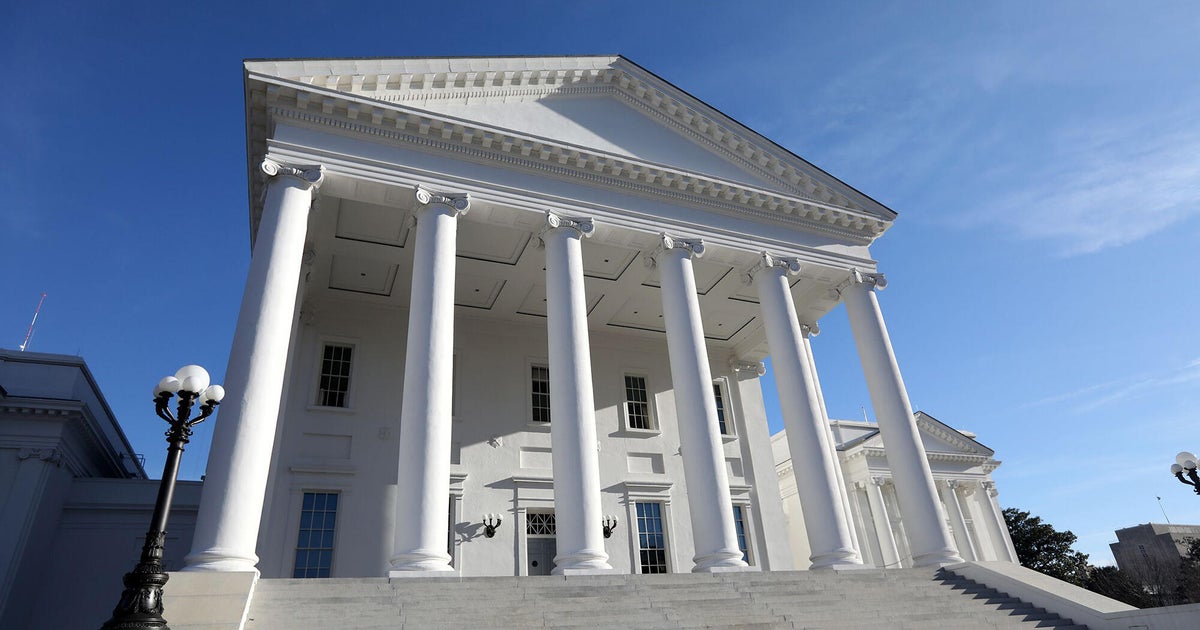
President Trump’s Republican Party has gambled on redrawing Democratic-held congressional districts in Texas, Missouri and North Carolina to help boost conservatives’ chances at holding on to a narrow House majority in the 2026 midterm elections. This out of the ordinary mid-decade approach, however, may end up costing Republicans as many as four congressional seats in Virginia.
Democrats this week have prepared a harsh partisan gerrymander that could dramatically shift the commonwealth’s representation on Capitol Hill if it were to become law and be used in this fall’s elections.
“Today we are leveling the playing field,” Virginia Democratic state Sen. L. Louise Lucas said in a social media video. “These are not ordinary times and Virginia will not sit on the sidelines while it happens.”
Questions remain, however, about whether the larger endeavor will survive ongoing legal scrutiny. And it faces the challenge of needing quick voter approval in a part of the south that is by no means a blue sanctuary of statewide voters.
“This extreme proposal rigs the game before a single vote is cast,” GOP Virginia Congressman Rob Wittman, one of the four incumbents targeted by the proposal, said in a statement,
The move in Virginia serves as the latest escalation of a feud between Republicans and Democrats ahead of an election rife with the historical precedent that the incumbent president’s party tends to lose House seats in the midterms.
Mr. Trump and Republicans in Texas moved last summer to shift five Democratic-held seats and shape them to be more favorable to Republicans.
California’s Democratic Gov. Gavin Newsom then made a national case to redraw his state’s maps to counter what was happening in Texas. He succeeded in winning the approval by his state’s voters of a new map last fall that could effectively curtail any gains the GOP aims to make.
In the months that followed, Republicans in North Carolina and Missouri each took a Democratic district in their respective states and changed the boundaries to help improve the likelihood that a GOP contender would instead carry the seat this fall.
But what started out as a dire dynamic for Democrats, one in which GOP legislative leaders around the country flexed their political muscle to help an embattled president moving closer to lame-duck status, may only end up helping Republicans minimally, if at all.
A court-ordered redraw in ruby red Utah is expected to help Democrats pick up one seat from the GOP. Kansas Republicans’ pursuit of changing the district of the state’s lone Democratic congresswoman quietly failed. A bipartisan deal in Ohio averted a nightmare scenario for the left of a harsh Republican gerrymander. And to close out 2025, a majority of Indiana Senate Republicans sided against Mr. Trump and voted down overhauling the state’s only two Democratic congressional districts.
Virginia Democrats have been working for months to respond to the national redistricting standoff. But doing so requires buy-in from the public, since just a few years ago, 66% of voters passed a measure giving congressional drawing power to a bipartisan commission.
Democrats are now aiming for an April 21 special election in which voters would have the chance to sign off on a new constitutional amendment allowing the party to push through the partisan gerrymander released publicly this week.
But Democrats’ redraw hopes are in peril, after a Virginia judge in January rejected the push, citing the steps the party quickly took to try and get the change on the ballot.
As more legal maneuvering plays out, Virginia Democrats have continued to push forward on their plans, culminating in the release of this week’s map proposal.
Currently, six of Virginia’s congressional districts are held by Democrats and five are held by Republicans.
Under the plan, four GOP congressional seats are targeted: Rob Wittman’s 1st District, Jen Kiggans, 2nd District, John McGuire 5th District and Ben Cline’s 6th District. Of those four, only Kiggans and Cline’s seats appear to have the potential to be competitive this year, while the other two would become comfortably blue. The new map unveiled this week would likely be among the most aggressive gerrymanders in the country, given Virginia’s recent partisan history.
Virginia is a purple state that has voted for the Democratic presidential candidate reliably since the 2004 election. But in the 2024 presidential election, Mr. Trump only lost the commonwealth by around six points.
It also may not end up being the last state to act before the midterms.
In Maryland, Democratic Gov. Wes Moore is trying to turn the state’s last GOP seat into an easy pickup for Democrats, but is in a standoff with the Democratic senate leader who opposes it.
Meanwhile, GOP Gov. Ron DeSantis and his fellow Florida Republicans are primed to try later this spring to potentially take away some of the state’s dwindling Democratic-held congressional seats.
Any changes, from Virginia and Texas to California and North Carolina, could prove to be critical in which party controls the House for the final two years of Mr. Trump’s presidency. Or they could end up being a footnote during a span of time where many political norms were discarded.