NEWYou can now listen to Fox News articles!
Sir Isaac Newton postulated that for every action, there is always an equal and opposite reaction. It’s Newton’s Third Law of Motion and one of the most important rules in all of science.
And Newtonian physics can tell you a great deal about reactions in politics.
We don’t yet know the dimension or the impact of the war in Iran. But there will be a political reaction of great importance as we head toward the midterms. It’s just too early to understand how the war will go, what unexpected twists it may take and how its consequences might reverberate through the midterms.
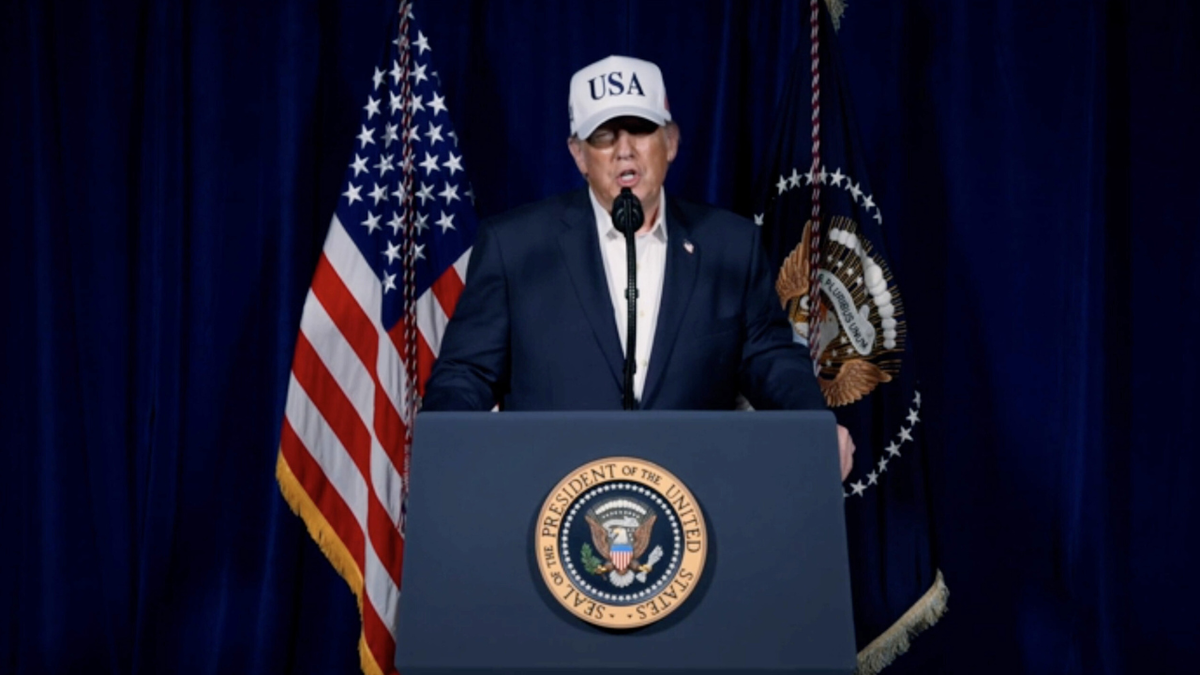
A screengrab from a video released on President Donald Trump’s Truth Social account shows Donald Trump making statements regarding combat operations on Iran on Feb. 28, 2026, in Palm Beach, Fla. (President Trump via Truth Social/Anadolu via Getty Images)
How things unfold is unclear. But an event of this breadth and proportion always poses some political impact. And the war may chart the course for the midterms.
Let’s start with President Trump’s campaign promises that he was “America First” and would keep the U.S. out of foreign conflicts. Well, that’s out the window. And there’s already some friction with the MAGA base. They may bolt if they believe the President reneged on one of his key campaign promises.
But so far, most congressional Republicans are standing beside the president. A handful of congressional Republicans — including Reps. Thomas Massie, R-Ky., and Warren Davidson, R-Ohio — agree with Democrats and assert that Trump must come to Congress before sending troops into harm’s way.
Not to downplay this, but it’s almost a “technical” argument. Yes, there are important questions about the Constitution, war powers and who has the right to “declare war.” But the war powers debate probably doesn’t resonate with a lot of voters. However, the decision to go to war when the president promised otherwise could pose potential problems for the president and congressional Republicans this fall. Voters who feel betrayed by the president could just stay home. Especially since it appears to fly in the face of the president’s campaign promise against starting wars.
Then there’s the body bag factor.
‘THE RIGHT THING’: PAXTON, CORNYN TRADE BLOWS IN TEXAS PRIMARY BUT UNITE FOR TRUMP’S IRAN STRIKES
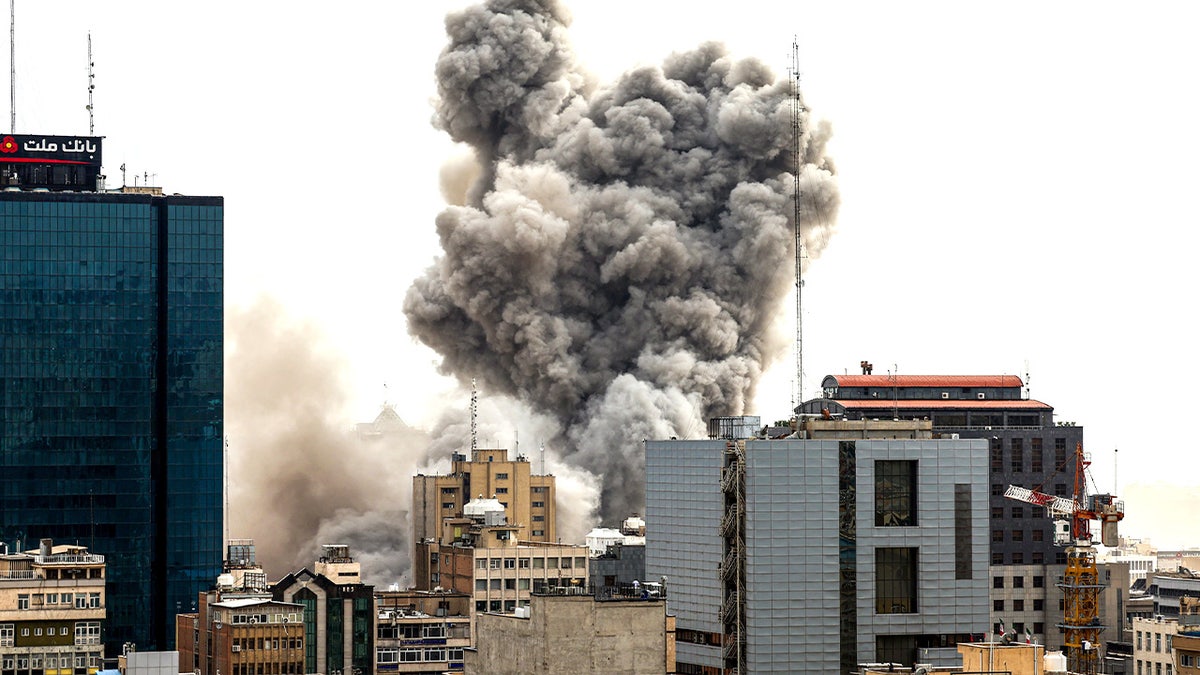
President Donald Trump confirmed the launch of U.S. strikes on Iran on Feb. 28, 2026. (Contributor/Getty Images)
Trump has been forthright, suggesting that there are possibilities of casualties. And there have already been some. He also doesn’t feel inhibited about a protracted war or even putting boots on the ground.
Remember what happened during the first Gulf War as the U.S. and allies went after Iraq after it invaded Kuwait in 1991. Then-President George H.W. Bush studiously courted other nations during a multi-month buildup in the region and secured the blessing from Congress. That’s not to say there was support across the board. But Bush and those aligned with him on Capitol Hill made the case to voters. Granted, Bush lost re-election in 1992. But some months earlier, the public embraced the campaign. There was flag waving. There were patriotic marches. There was the legendary performance of the National Anthem by Whitney Houston at the Super Bowl.
The president’s approval rating spiked to a staggering 89% in the early days of the war. But it cratered to around 30% 17 months later because of the economy.
So let’s say the war goes well and casualties are limited. Congressional Republicans could ride the coattails of Trump. Republicans may even be able to put a few districts into their camp if a wave of patriotism sweeps over the country.
But watch out if this is a drawn-out campaign and casualties are high. Or, if Americans don’t understand why the U.S. is involved. So far, Trump has given a litany of reasons why the U.S. attacked Iran. Congressional Democrats don’t like the answers they are hearing.
Regime change is certainly good if you toss out dictators. But that means little to a day laborer who voted in Wisconsin and is struggling to make ends meet.
DOUG SCHOEN: AS A DEMOCRAT, I BACK TRUMP’S IRAN STRIKE — MY PARTY IS WRONG
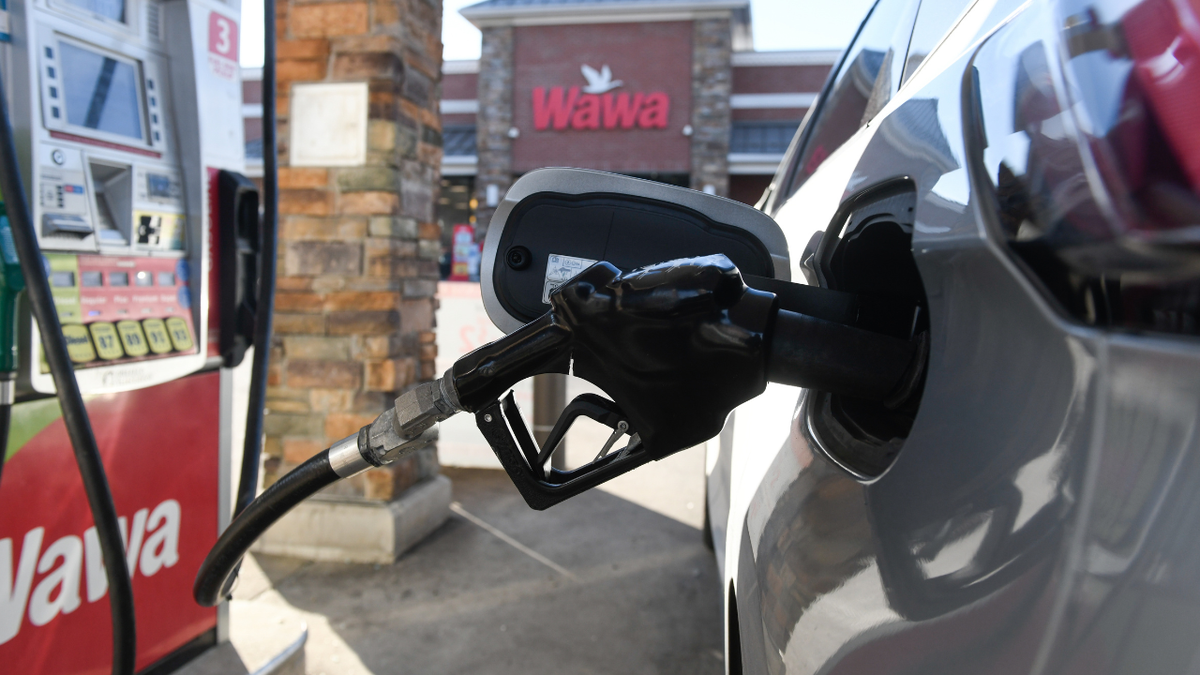
A driver refuels a vehicle at a Wawa gas station in Media, Pa., on March 2, 2026. (Matthew Hatcher/Bloomberg/Getty Images)
Also, watch the price of gasoline. The Strait of Hormuz is the only shipping lane from the Persian Gulf to the open sea and a notorious choke point. The transport of oil through the Strait is already declining rapidly. Another commodity moved through the Strait is liquefied natural gas (LNG). It wasn’t that long ago that Democrats and voters were convinced that the 2026 midterms were going to be about affordability. Voters will balk if inflation sets in with fuel — to say nothing of the cost of goods and services because it’s more expensive to transport things.
There’s a risk that the war is a tipping point for the region and the Middle East devolves into chaos. Again, mayhem in the Middle East won’t matter much to a swing voter in northern Maine. But instability of that magnitude has the potential to shock markets, drive up prices and impact the availability of products on store shelves. And the risks are geometrically more complicated if China or Russia somehow get involved.
Then there is the biggest wild card: terrorism.
It’s possible that a heinous terrorist attack — especially on U.S. soil — could spur voters to rally ‘round the flag and actually help the GOP. Look at how President George W. Bush gained support after 9/11. And consider the fact that Republicans went against the historic norm and actually gained seats in the 2002 midterms. The party of the president usually loses an average of 27 House seats in the first midterm. 2002 was one of only three instances that the president’s party picked up seats in a modern midterm election.
That said, some voters may argue that the consequences and carnage of a terrorist attack wasn’t worth bombing Iran. So that has the potential to backfire on the president and congressional Republicans.
However, Democrats have some exposure to the terrorism issue. Democrats have refused to fund the Department of Homeland Security (DHS) for nearly three weeks as they demand changes to ICE. Fighting against ICE resonates with the Democratic base. But Democrats could be in trouble if there’s a major terrorist attack. That’s why House Republicans are forcing a vote this week to get Democrats on the record on a bill to fund DHS.
Yes, Republicans believe DHS should be fully operational. Especially now. But Republicans want voters to understand who blocked funding DHS as the U.S. enters a tumultuous period on the world stage and the war in Iran deepens. Continuing to oppose money for DHS could come back to haunt Democrats if, God forbid, there’s a major terrorist attack during the funding lapse. The ads for the midterms practically write themselves.
For every action there is an equal and opposite reaction, said Newton in his Third Law of Motion. We can’t yet calculate the equal pushback that’s likely coming as a consequence of the war in Iran in the fall midterms. But there will be something.
CLICK HERE TO DOWNLOAD THE FOX NEWS APP
But perhaps Newton’s First Law of Motion has even broader application to understanding the impact in the midterms. Newton wrote that an object at rest stays at rest. And an object in motion stays in motion.
Things were “at rest” with Iran until Trump started the war. And now the Iran issue is “in motion.” That makes it more challenging to stop it.
Related Article