
NEWYou can now listen to Fox News articles!
The Supreme Court on Wednesday will weigh the legality of President Donald Trump‘s bid to revoke temporary legal status for hundreds of thousands of migrants living and working temporarily in the U.S. — a closely watched court fight with possible far-reaching ramifications.
At issue in Mullin v. Doe is the Trump administration’s effort to revoke Temporary Protected Status (TPS) designations for some 350,000 migrants from Haiti and roughly 7,000 migrants from Syria. TPS grants individuals from certain countries temporary legal status to live and work in the U.S. if their home countries are deemed by the U.S. to be unsafe to return to, due to a disaster, armed conflict or other “extraordinary and temporary conditions.”
The Supreme Court agreed last month to review the two consolidated cases, and took the somewhat unusual step of granting “certiorari before judgment” — or, reviewing the case on its merits before federal appeals courts reviewed the lower district rulings. A ruling could come as early as this summer.
Trump’s efforts to end TPS are not new. The administration has moved to revoke TPS designations for 13 countries since last January, and the arguments themselves are expected to focus closely not on the merits of individual designations under TPS, but the power of the courts to review the designations.
A ruling from the high court could therefore have much more widespread ramifications, not only for the TPS holders from Haiti and Syria, but for the more than 1.3 million migrants currently living in the U.S. under the temporary legal program.
BIDEN-APPOINTED FEDERAL JUDGE RULES TRUMP’S ‘THIRD COUNTRY’ DEPORTATION POLICY IS UNCONSTITUTIONAL
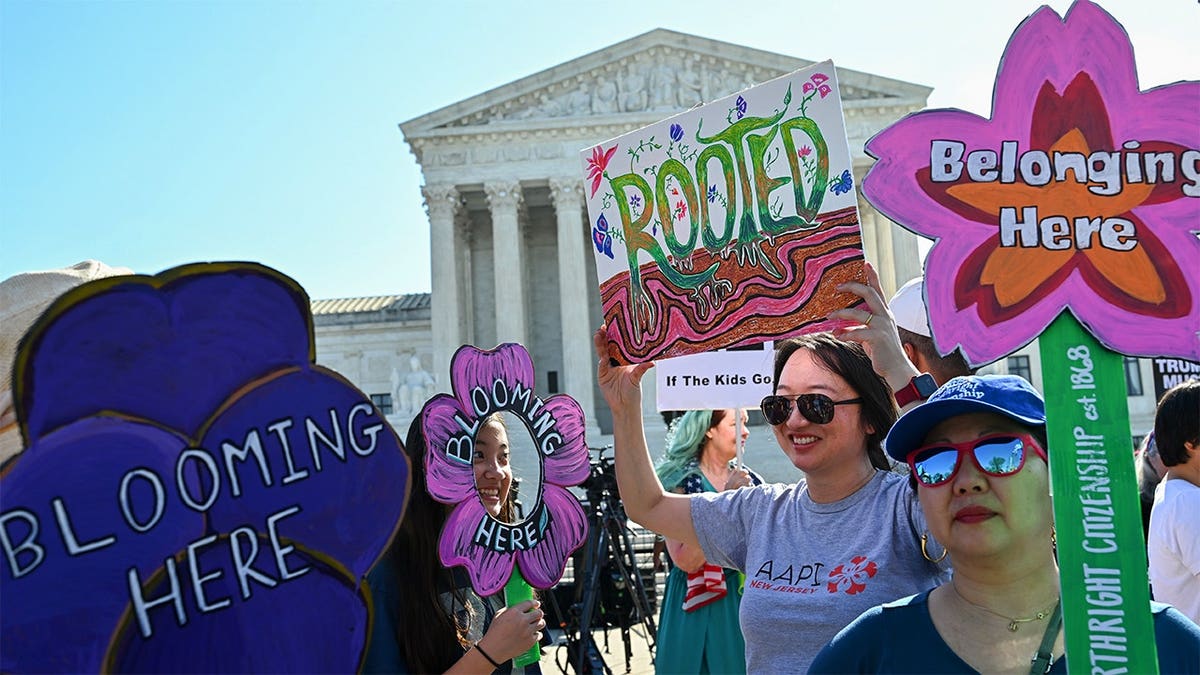
Demonstrators outside the Supreme Court in Washington, D.C., on Wednesday, April 1, 2026. (Graeme Sloan/Bloomberg via Getty Images)
Trump has sought to unwind TPS designations, arguing they have been extended for far too long under former administrations, including under former President Joe Biden.
Lawyers for the Trump administration urged the Supreme Court in March to consolidate two lower court cases seeking to overturn orders that blocked the administration from immediately revoking the temporary protected status designations for Syrian and Haitian migrants.
Solicitor General D. John Sauer urged the court to review more broadly the question of whether the Trump administration can revoke TPS without interagency review, citing a portion of the provision that states there “is no judicial review of any determination” of the DHS secretary “with respect to the designation, or termination or extension of a designation, of a foreign state.”
In the administration’s view, he said, that means that these cases, “directed at a specific TPS designation, termination, or extension,” are “unreviewable.”
SUPREME COURT SIGNALS IT MAY LIMIT KEY VOTING RIGHTS ACT RULE
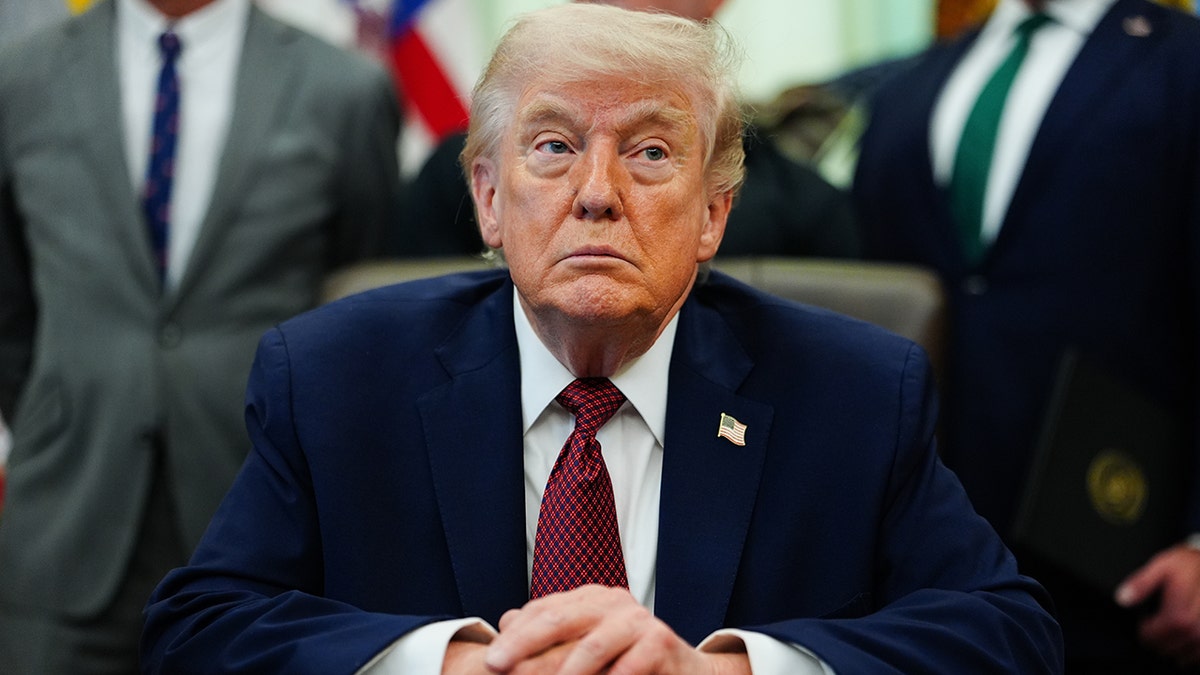
President Donald Trump listens in the Oval Office of the White House in Washington, D.C., on Saturday, April 18, 2026. (Julia Demaree Nikhinson/AP)
“Unless the court resolves the merits of these challenges — issues that have now been ventilated in courts nationwide — this unsustainable cycle will repeat again and again, spawning more competing rulings and competing views of what to make of this court’s interim orders,” Sauer said. “This court should break that cycle.”
The case sets up a broader legal fight over how much authority district courts have to block immigration decisions made by the executive branch.
Haitians were first granted TPS status in 2010 after the devastating earthquake that killed more than 200,000 people and left some 1.5 million in the country homeless.
Both U.S. District Judge Ana Reyes and U.S. District Judge Katherine Polk Failla blocked Trump’s bid to end TPS for Haitian and Syrian nationals, respectively, earlier this year.
Reyes ruled that it was “substantially likely” that then-DHS Secretary Kristi Noem had ended the Haitian TPS designation “because of hostility to nonwhite immigrants,” and said she failed to consult with other agencies as required under the APA.
SCOTUS TO REVIEW TRUMP EXECUTIVE ORDER ON BIRTHRIGHT CITIZENSHIP
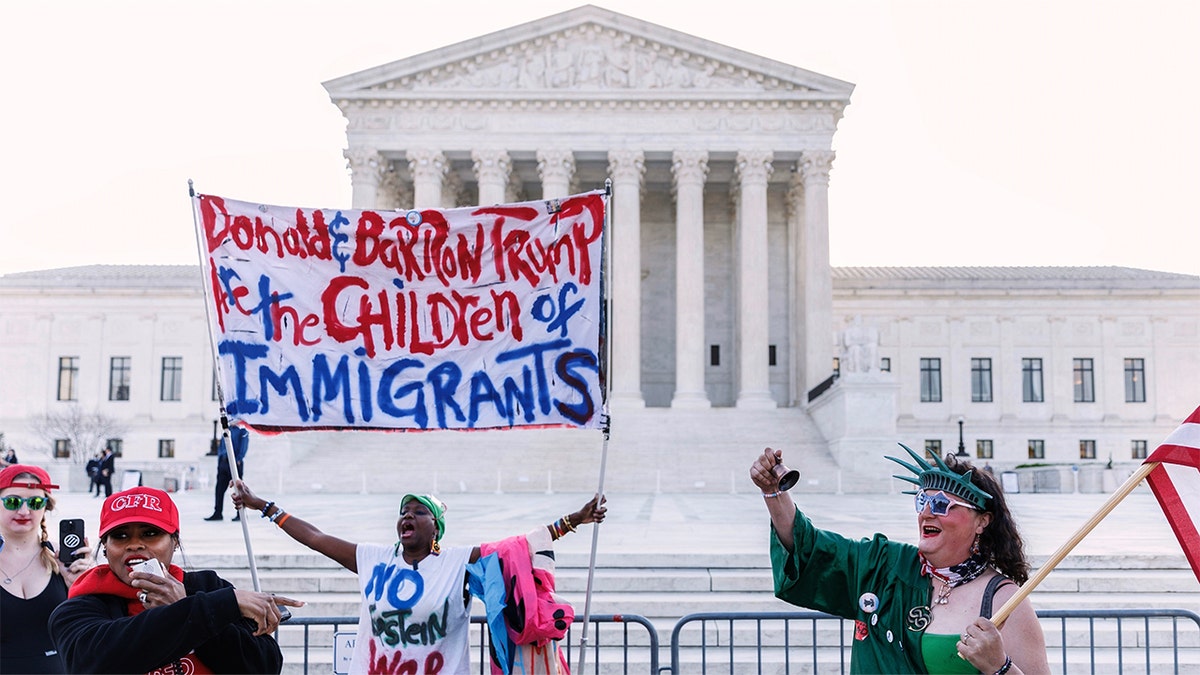
Demonstrators with opposing views verbally engage outside the U.S. Supreme Court in Washington on April 1, 2026, ahead of President Donald Trump’s arrival. (Tom Brenner/AP Photo)
Failla’s ruling said much of the same, noting that the administration’s efforts to end TPS applied not only to Syrian migrants but for individuals from “virtually every country that has come up for consideration.”
Trump officials have taken aim at district courts that have sought to block or pause their efforts to wind down TPS protections, accusing the judges of exceeding their authority and unlawfully intruding on the executive branch’s authority, especially when it comes to immigration policy.
CLICK HERE TO GET THE FOX NEWS APP
A Supreme Court ruling on the consolidated cases, expected by early summer, could determine how far the current and future administrations can go in scaling back humanitarian immigration programs.