
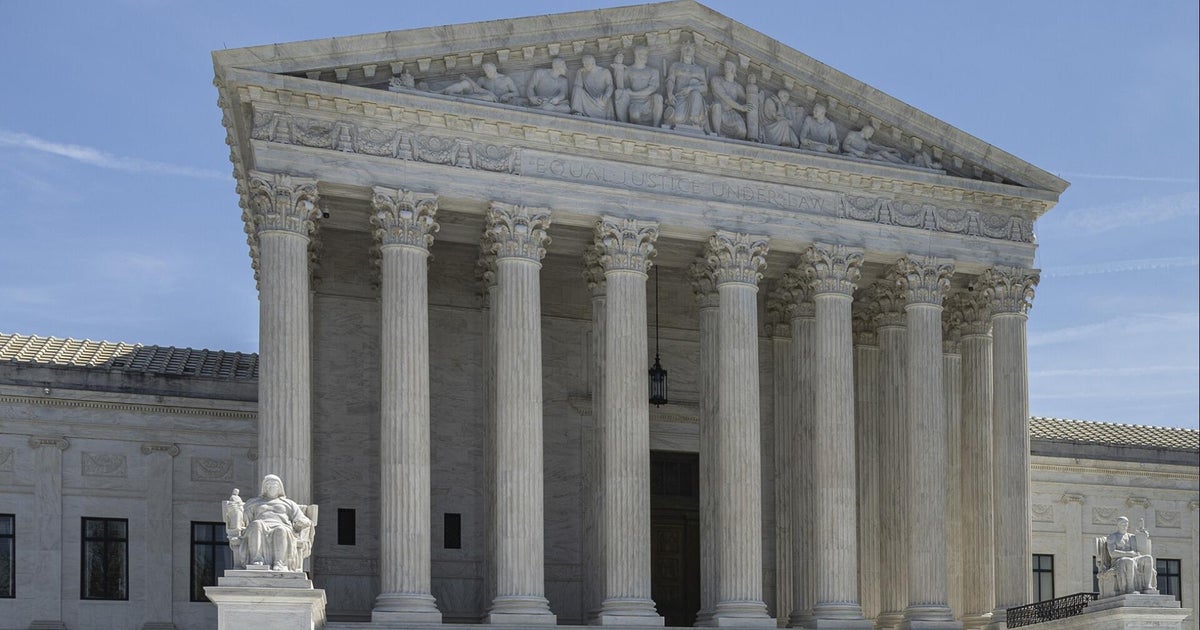
The Republican governors of Tennessee and Alabama called state lawmakers into special sessions on Friday, initial steps in what could be a scramble across multiple southern states to redraw congressional maps after the Supreme Court narrowed the Voting Rights Act.
Depending on how state officials proceed and whether courts intervene, legislators may try to split up Tennessee’s sole Democratic district and eliminate one of Alabama’s two blue seats.
Tennessee Gov. Bill Lee convened a special session that will start Tuesday, writing in a statement Friday that lawmakers “owe it to Tennesseans to ensure our congressional districts accurately reflect the will of Tennessee voters.”
Lee said any changes to Tennessee’s map “must be enacted as soon as possible.” The state has primaries scheduled for Aug. 6 in this year’s congressional elections, though the deadline for candidates to qualify for the primary ballot was in March.
GOP Sen. Marsha Blackburn, who is running for governor of Tennessee, has called on state lawmakers to draw a map that gives Republicans an edge in all nine of the state’s congressional districts, splitting up the Memphis-area district held by Democratic Rep. Steve Cohen. President Trump has strongly urged Lee to redraw the state’s map to give Republicans “one extra seat.”
Meanwhile in Alabama, Gov. Kay Ivey called a special legislative session starting Monday to potentially schedule special primary elections if a new House map is implemented.
Ivey said she wants the state to be “prepared should the courts act quickly enough” for the House map to be changed in time for this year’s elections. The state’s primaries are set for May 19, and the deadline for candidates to file was in January.
Alabama faces a complicated situation due to years of litigation over its congressional districts. The Supreme Court ruled in 2023 that Alabama’s House map violated the Voting Rights Act, and later that year, a three-judge panel rejected another map that was crafted by state lawmakers. A court-appointed expert then drew a fresh map, resulting in two House districts where Black voters make up a significant portion of the electorate, both held by Democrats.
If permitted by the courts, Ivey said she is aiming to return to the state legislature’s 2023 map, which had one majority-Black, Democratic-leaning House seat.
Under a court injunction issued last year, Alabama’s existing map is required to remain in place until after the 2030 Census. But state Attorney General Steve Marshall on Thursday asked the Supreme Court to vacate the lower court ruling that struck down lawmakers’ 2023 map, citing the high court’s decision earlier this week.
The gambit was made possible by the Supreme Court’s decision Wednesday in Louisiana v. Callais. In a 6-3 ruling, the high court struck down a Louisiana map that includes two majority-Black House districts, upholding a lower court ruling that found state lawmakers relied too heavily on race.
Louisiana officials reacted Thursday by moving to suspend its House primaries scheduled for later this month, potentially setting the stage to draw a new map.
But the ruling’s impacts are expected to stretch well beyond Louisiana because, in effect, it narrowed a portion of the 1965 Voting Rights Act that had previously been interpreted to require states to draw districts where minority groups make up a majority in some circumstances. Now, districts only violate the Voting Rights Act when there is a “strong inference that intentional discrimination occurred,” Justice Samuel Alito wrote in the majority opinion.
Beyond Alabama and Tennessee, legislators in Mississippi are planning to hold a special session to redraw the state’s Supreme Court districts. Some state officials have suggested also redrawing the state’s U.S. House maps to unseat Democratic Rep. Benny Thompson, though it might be too late for this year because Mississippi has already held its primary elections.
Florida has also moved to redraw its House maps and give the GOP an edge in four more seats, an effort that was launched prior to the Supreme Court’s ruling.
Well before this week’s ruling, several states had launched rare mid-decade redistricting efforts ahead of the hotly contested 2026 midterm elections.
Texas lawmakers shifted five Democratic districts toward the GOP last summer, and California reacted by moving five of its Republican-held districts leftward. Missouri and North Carolina shifted one Democratic district apiece to the right, and last month, Virginia voters approved a measure to create four new districts that favor Democrats.