
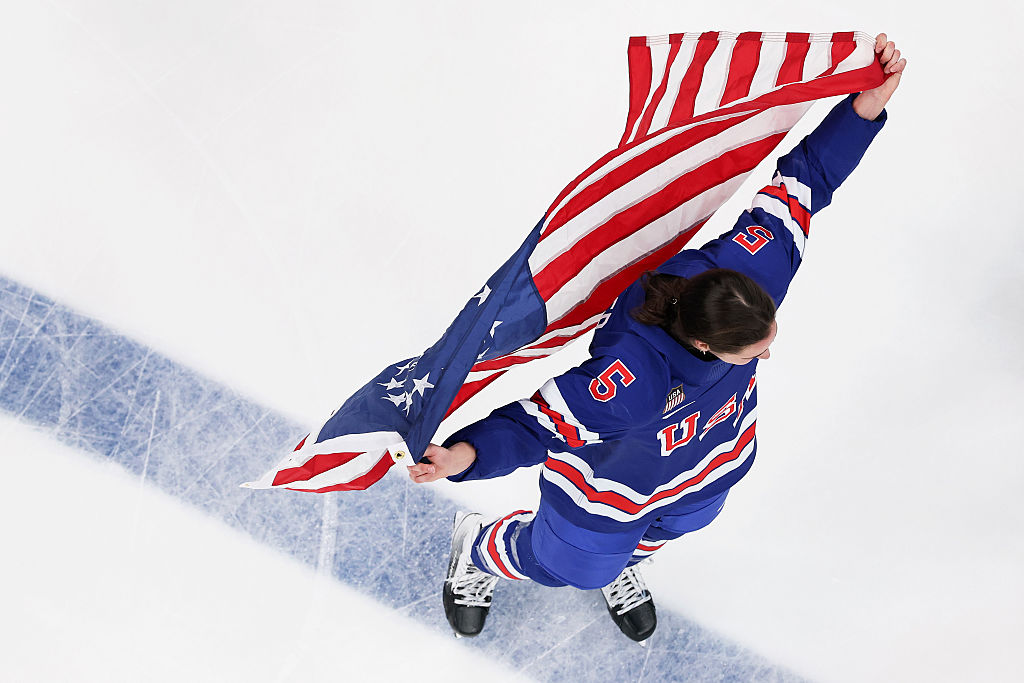
Tomorrow marks the end of one of the great seasons in sports, one that only comes every four years. Two weekends ago, the Winter Olympics opened in northern Italy just before Super Bowl Sunday. The closing ceremony occurs tomorrow.
And while most viewers tune in to cheer on the U.S. hockey teams, see great athletes like skiing sensation Mikaela Shiffrin, or watch death-defying stunts in competitions like the big air jumps, the machinations that happen around the Olympics reveal quite a lot about how international politics work.
The Olympics originated in ancient Greece, and the modern incarnation launched 130 years ago. The British Empire sustained an unusually peaceful international order then, and the first wave of globalization was nearing its peak. There were plenty of troubles out in the colonies, and European armies stamped out uprisings or conquered new territory in Africa and Asia, but Europe was mostly peaceful. The global imperial wars of the 18th century and the earth-shattering cataclysm sparked by the French Revolution seemed like distant memories.
The revived Games exemplified this period of great power peace. Many thought of them as a pure showcase for human excellence, where the best athletes in the world would compete as individuals rather than as symbols of their home country’s greatness.
That did not last long. Global war reappeared less than 20 years after the games did. Some of the most horrific and deadly ideologies in human history took root across the globe after World War I.
The Games developed strong geopolitical overtones. American track star Jesse Owens quietly humiliated the Nazis during the 1936 games in Berlin by demolishing their claim that the Germans were world-beating Übermenschen. The Soviet Union’s basketball gold medal in 1972—which only came after the refs gifted the team do-overs in the final seconds against the Americans—highlighted fears that America’s might was close to being eclipsed. The “Miracle on Ice” at Lake Placid during the waning Jimmy Carter presidency foretold for many the host country’s reinvigorated power.
The Games originated in one of the West’s birthplaces, and their emphasis on individual achievement displays some of the West’s greatest strengths. The Nordics, the Canadians, and other Western cold-weather countries tend to excel at the classic winter sports. The United States usually does well in the medal count too because it attracts high performers from all over the world, and its athletes innovate and create new competitions, particularly in extreme skiing and snowboarding.
The American system is going strong, too: In sports, as in other fields, some countries catch up with the latest and greatest from the States by sending their top talent to train here. The U.S.-led international order ultimately depends on American power, but the United States has outlasted several rivals in part because many other countries get more out of defending that order instead of attacking it. American statesmen figured out long ago that the cheapest and best way to preserve the peace and benefit the nation’s people is to encourage other countries to adopt our very systems.
That does not always work out, though, and geopolitics are back at the Games. China’s top-down training program focuses on developing its best athletes to win obscure medals in the Summer Olympics, so it is getting blown out in the medal count this year. To make a respectable showing, it must poach American talent, such as Eileen Gu, much as its labs actively court top American scientists and its companies and spy agencies steal American intellectual property.
Chinese ethno-nationalism is also on display. In a break with tradition, the Chinese Communist Party claims that all people of Chinese descent owe loyalty to Beijing. Gu seems perfectly content to enjoy the blessings of the land of her birth while sporting the flag of a country reportedly imprisoning millions of people in concentration camps, but the Communists nonetheless see her as a model for the overseas Chinese. By contrast, American skater Alysa Liu and her father, who escaped the massacre at Tiananmen Square, face harassment and intimidation from the Chinese authorities.
The West is struggling to unify against these threats, and the internal squabbling is going strong in Italy. A French judge gave an ice-dancing gold to her compatriots by awarding them an unusually high score and docking the Americans extra points. As evinced by the scores, her Italian counterpart was the only one to fully appreciate the finer points of the Italian duo’s performance too. And the Canadian curling team is under fire for allegedly touching their stone past the hog line. This division does not matter in sports, but in affairs of state, it’s a different story.
Not everyone in 1896 was confident that the international bonhomie would endure. In his Devil’s Dictionary, American satirist Ambrose Bierce defined “peace” as “a period of cheating between two periods of fighting.”
Beats the alternative. Long may it last.