
President Trump said Friday he is nominating Kevin Warsh to serve as the next chair of the Federal Reserve Board, filling a powerful economic policy role as the president pushes for lower interest rates.
Mr. Trump made the announcement on his Truth Social platform.
Warsh was a member of the Fed’s board for five years starting in 2006, when former President George W. Bush named him to the central bank right before the financial crisis. In recent years, he has worked with billionaire investor Stanley Druckenmiller and held academic positions, including at the Hoover Institution.
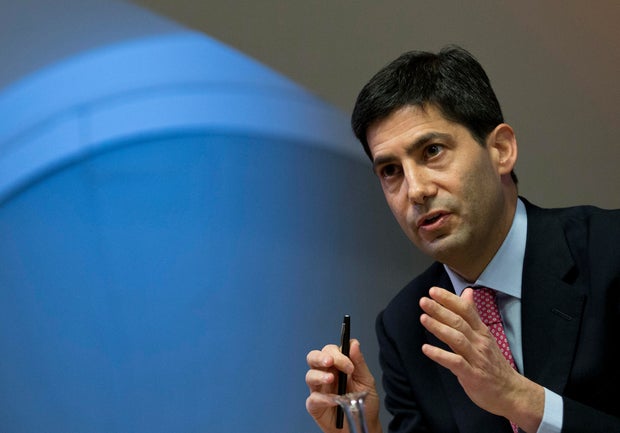
If confirmed by the Senate, Warsh will helm a Federal Reserve that has faced months of intense pressure from Mr. Trump to dramatically slash rates — a move that could boost economic growth, but at the risk of sparking higher inflation. The Fed has lowered rates three times since September, most recently on Dec. 10, but Fed officials indicated in a projection earlier this month that they expect just one cut this year.
Warsh suggested earlier this year he’s open to lower interest rates, and he’s been deeply critical of the Fed’s handling of inflation in recent years, arguing the central bank has a “credibility crisis” and is in need of “regime change.” But he has also called it “essential” that the Fed maintain its independence over monetary policy.
Warsh was picked to replace outgoing Federal Reserve Chair Jerome Powell, who has drawn Mr. Trump’s ire for the Fed’s perceived slow pace of lowering rates. The president has called Powell a “dumb guy,” a “stubborn mule” and “Mr. Too Late,” and has mused about firing him.
Then, in a surprise video announcement earlier this month, Powell said the Fed had received subpoenas threatening him with criminal charges over a pricey project to renovate the central bank’s D.C. headquarters. Powell argued the investigation was part of an attempt to intimidate the Fed for its interest rate decisions, undermining its independence. The White House said Mr. Trump didn’t direct the Justice Department to issue the subpoenas.
Powell was initially appointed Fed chair by Mr. Trump in 2018, and was named to a second four-year term by former President Joe Biden.
In an opinion piece earlier this year, economist Kenneth Rogoff said Warsh is “highly regarded” but “even more hawkish than Powell,” meaning he tends to support higher interest rates.
The discord over Powell could make it more difficult to confirm Warsh. Several Senate Republicans sharply criticized the Justice Department’s subpoenas, with Sen. Thom Tillis of North Carolina vowing to oppose all Fed nominees “until this legal matter is fully resolved.”
Some Fed-watchers also think the subpoenas might make Powell more likely to stay on the Federal Reserve’s seven-member board as a rank-and-file member after his term as chair ends in May. Most Fed chairs have resigned from the board after they’re no longer the boss, but Powell can remain a board member until early 2028, diluting Mr. Trump’s influence.
How interest rates are determined
Target interest rates are technically set not by the Fed chair, but instead by a 12-member panel called the Federal Open Market Committee. The chair has historically wielded a great deal of influence over the committee’s decision and helped build consensus.
When setting rate targets, the Fed faces a balancing act between its dual goals of keeping inflation low and employment levels high. In 2022 and 2023, the Fed hiked interest rates from near 0% to a decades-long high, aiming to stem the worst inflation in around 40 years.
Since then, the central bank has lowered rates at a slow clip, cutting by a percentage point in late 2024, leaving them steady for most of 2025 and cutting by 0.75 percentage points since September. It kept the benchmark rate unchanged in its most recent meeting earlier this week.
The Fed has suggested it wants to move cautiously due to uncertain economic conditions. Inflation has fallen significantly since its 2022 peak but remains above the Fed’s 2%-per-year target, and the job market has cooled off despite the unemployment rate remaining fairly low. Powell has also warned that Mr. Trump’s tariffs are contributing to inflation.
Mr. Trump has openly pushed back against this strategy, and has made no secret of his desire for the next Fed chair to move more quickly on cutting rates.
“I’m looking for somebody that will be honest with interest rates,” he told reporters on Dec. 10 when asked about the search for a new chair. “Our rates should be much lower.”
The president has long asserted that the Fed should take his views into account. Mr. Trump said on Dec. 12 that “my voice should be heard” on rate-setting decisions, arguing he has strong instincts because of his business background.
“I’ve made a lot of money, I’ve been very successful, and I think my role should be at least that of recommending,” the president said. “They don’t have to follow what I say.”
Mr. Trump has also tried to fire Fed board member Lisa Cook, accusing her of mortgage fraud, though the courts have left Cook in place while her lawsuit seeking to reverse the firing proceeds. Under federal law, members of the Fed board can only be fired for cause.
The Fed has a longstanding history of acting independently from the executive branch. Experts believe the Fed’s ability to set interest rates on its own gives the central bank credibility and eases fears that it is motivated by politics. And some economists worry that a loss of independence could lead to higher inflation in the long run because presidents may be tempted by the politically popular short-term benefits of low interest rates, like a hotter economy.
Asked on Dec. 10 if he pushed finalists for the Fed chair job to pledge to lower rates, Mr. Trump said: “No. I’ll be asking questions and I’ll be able to figure it out.”