
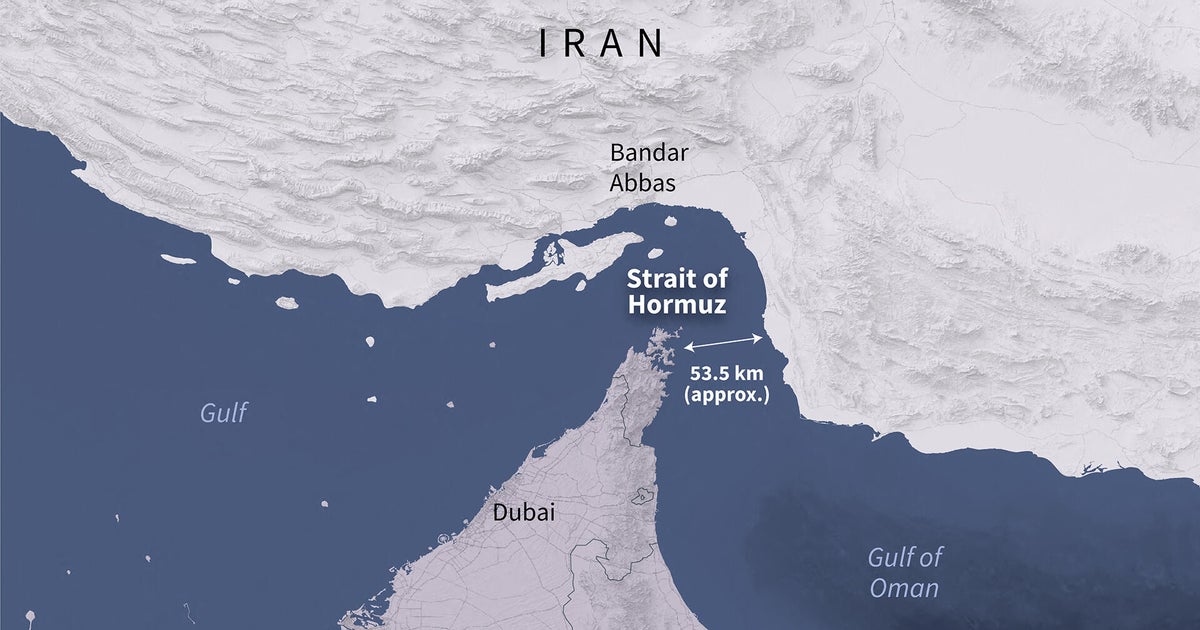
Washington — A recent American intelligence assessment showed that U.S. forces have identified at least 10 mines in the Strait of Hormuz, according to U.S. officials with knowledge of the matter. The officials spoke with CBS News anonymously in order to discuss sensitive national security matters.
CBS News previously reported in March that there were at least a dozen underwater mines in the Strait of Hormuz, according to American intelligence assessments at the time. The same month, officials said the mines currently employed by Iran in the strait are the Iranian-manufactured Maham 3 and Maham 7 Limpet mines. Another U.S. official put the count at less than a dozen.
The Maham 3 is a moored naval mine that uses magnetic and acoustic sensors to detect nearby vessels without physical contact. It can engage targets within about 10 feet, analyzing movement to determine the most effective moment to activate.
The Maham 7 is known as a “sticking mine” and is designed to rest along the seabed, relying on a combination of acoustic and three-axis magnetic sensors to detect nearby vessels. It targets medium-sized ships, landing craft and smaller submarines.
CBS News was unable to determine what type of mines were in involved in this latest assessment. Earlier this month, the U.S. military began directing commercial ships toward a route in the Strait of Hormuz farther from Iran that the Navy has spent weeks clearing of mines.
The U.S. warned that transiting the normal route could be “extremely hazardous” because of mines laid in the strait by Iran. The Pentagon this month displayed a graphic saying Iran had laid new mines in the strait on April 23.
The vital passageway, which is considered one of the most critical chokepoints in the global economy, continues to be a point of contention between Washington and Tehran. Before the conflict began, about 20% of global oil flowed through the strait — roughly 15 million barrels of crude per day — along with liquefied natural gas shipments. Higher gas prices have been squeezing consumers: A gallon of gasoline around the country now costs an average of $4.50, up more than $1.50 since the war started, according to AAA.
Iran said this week that it’s working with Oman to create a joint “mechanism” to control traffic through the vital shipping lanes of the strait.
President Trump said Monday that he was calling off a scheduled attack on Iran that was supposed to occur on Tuesday — the abrupt about-face from Mr. Trump said was due to “serious negotiations” that were taking place toward a peace deal that he said would be acceptable to the U.S. and Middle East countries.