
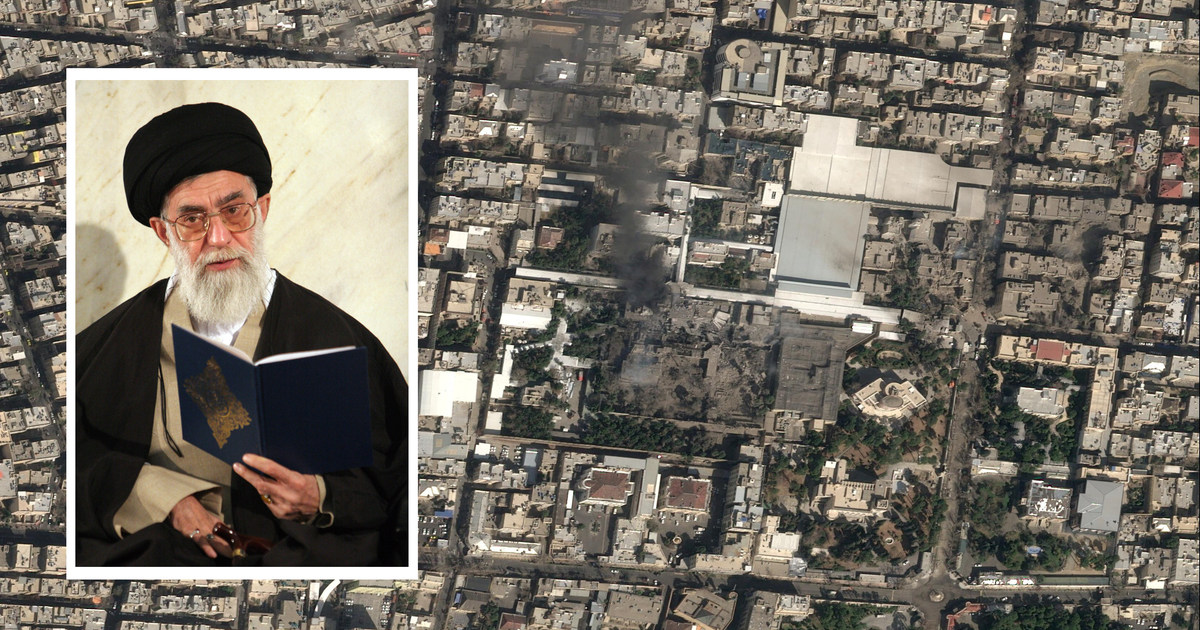
Senior administration officials on Saturday briefed reporters on the runup to the U.S. strikes against Iran, said the U.S. had sought a diplomatic solution to its impasse with Iran, but it ended up as “not a tangible and realistic option.”
They said that the factors in President Trump’s decision to strike were the long-term threat of Tehran’s ambitions to acquire nuclear weapons and the short-term threat posed by its conventional missile capability. In the negotiations, the Iranians “refused at every instance to address ballistic missiles,” the officials said. They added that Iran refused to address proxies, which Mr. Trump “thought was a critical issue that needed to be addressed in any deal”
After last year’s U.S. strikes against Iran’s nuclear program, the U.S. determined that if Iran began to rebuild, “we’ll have to address it,” the officials said.
According to one senior administration official, they “had indicators” that Iran could potentially use conventional missiles “preemptively, but if not, simultaneous” to any actions against them by the U.S.
The president “was not going to sit back and wait to get hit first” and if he had, the “amount of casualties and damages would be substantially higher” than if the U.S. acted preemptively, they said.
In negotiations, Mr. Trump pushed for a deal that would prevent Iran from ever developing a nuclear weapon and felt that in the talks, “there was no seriousness to achieve a real deal.” U.S. negotiators offered to provide Iran with “free nuclear fuel forever” for a safe civil nuclear program, but the Iranians insisted on maintaining the ability to enrich their own nuclear fuel, according to the officials.
Initially Iran agreed “for a short period of time not to do enrichment” but then retracted its agreement, the officials said, which the U.S. interpreted as “a big tell to us that they were looking to buy time.”
“It was clear to us that they were in the throes of rebuilding all that had been destroyed in Midnight Hammer,” they added.
The senior officials said it was “very clear” that Iran’s intent “was to preserve their ability to do enrichment, so that over time, they could use it for a nuclear bomb.” They said Iran was offered “many, many ways” to have a civil, peaceful nuclear program, “but instead that was met with games, tricks, stall tactics.” They concluded that Mr. Trump “frankly had no choice” but to act.
When U.S. negotiators asked Iran for its enrichment requirements for material and capabilities, Tehran presented them with a 7-page plan that the IAEA estimated would provide Iran with an enrichment capability that was roughly five times greater than the one from the previous Iran nuclear deal. Mr. Trump withdrew from that deal during his first administration.
The senior administration officials said that Iran had developed the ability to construct their own centrifuges – IR-6 centrifuges, which they said were “the fastest ones out there” – and had built up manufacturing capacity since the U.S. strikes on their nuclear facilities.
The strikes last year did not target the Tehran Research Reactor, which requires 20% enrichment protocols to build radio isotopes to produce medicine and conduct agricultural research, the officials said. But the IAEA said Iran did not use fissionable material to produce any medicine, and was instead stockpiling it.
Tehran had about 450 kg of 60% enriched uranium and was technically one week from 90% weapons grade uranium, the officials said.