
The new text clarifies that the legislation ‘would not censor, limit, or remove any content from the internet.’
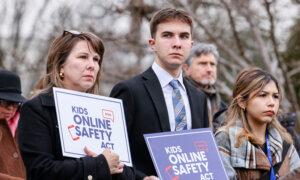
Elon Musk’s social media platform X led negotiations for recent changes to the text of the proposed Kids Online Safety Act amid censorship concerns in the U.S. House of Representatives.
A previous version of the bill passed the Senate with overwhelming support in July. The legislation has since stalled in the House, where Republican leaders have voiced fears that it would allow for government censorship of speech published online.
Sens. Marsha Blackburn (R-Tenn.) and Richard Blumenthal (D-Conn.), the bill’s sponsors in the Senate, said the revised version should assuage those fears.
“Led by X, the new changes made to the Kids Online Safety Act strengthen the bill while safeguarding free speech online and ensuring it is not used to stifle expression. These changes should eliminate once and for all the false narrative that this bill would be weaponized by unelected bureaucrats to censor Americans,” the senators said in a joint statement on Dec. 7.
X CEO Linda Yaccarino said that free speech and safety “can and must coexist,” she said the revised bill accomplishes that goal.
Related Stories
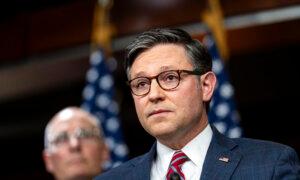
Their criticisms centered on the fact that the bill tasks the Federal Trade Commission (FTC) with enforcing a legal “duty of care” that requires social media providers to mitigate certain health and safety risks for minors.
Although the FTC is an independent federal agency, its commissioners are nominated by the president.
In a report released in October by the House Oversight and Accountability Committee, the Republican investigators accused FTC Chair Lina Khan of turning the FTC in a leftist direction, per the Biden administration and progressive influence.
In September, the House Committee on Energy and Commerce advanced its own amended version of that chamber’s Kids Online Safety Act, which would limit application of the “duty of care” to high-impact platforms, rather than all platforms. The bill also introduced different knowledge standards based on platform size and excluded certain mental health conditions from its list of harms.
Asked if the bill might come up for a vote before the next Congress, Scalise told reporters on Dec. 4 that the House was still working to address the provisions that would empower “an unelected bureaucrat” to regulate online speech.
The Senate’s updated measure attempts to resolve that concern with a provision that establishes that nothing in the bill allows for its enforcement based on social media users’ constitutionally protected speech.
According to the offices of Blackburn and Blumenthal, the new text serves to clarify that the legislation “would not censor, limit, or remove any content from the internet” or empower the FTC or state attorneys general “to bring lawsuits over content or speech, no matter who it is from.”
The bill is endorsed by 32 state attorneys general and more than 240 organizations, including the Heritage Foundation and the America First Policy Institute.
Tom Ozimek and Terri Wu contributed to this report.
Original News Source Link – Epoch Times
Running For Office? Conservative Campaign Consulting – Election Day Strategies!